







 Chat
Chat


Do you feel that workplace performance is declining, that your managers lack leadership and that your team is failing to deliver the successes or results you know they are capable of? One of the easiest things you can do to fix this is to review employee engagement.
What is Employee Engagement?Employee engagement is not the feeling employees get when they are given a bunch of their favorite snacks during their tea break. Employee engagement means having a dedicated workforce where employees are working effectively, invested in the company. Engaged employees produce better products and deliver more meaningful services. Employee engagement means that employees inspire others to create better business outcomes. Employee engagement is not an HR initiative, it is a leadership initiative!

We tend to think of employee engagement as something that only happens occasionally. A workplace should not just witness employee engagement, but build on it every day. A workplace that demonstrates good employee engagement knows that it should happen every day, not once a year or once in a lifetime. Despite all this, we spend a significant amount of time conducting surveys and research to understand what constitutes employee engagement, hoping that ideal conditions will recur. Yet our efforts miss a fundamental point: employee engagement is a core competency that successful leaders can learn and develop.
How to Build Employee Engagement?
It is true that few leaders are able to engage employees based on their personality or previous experience. Some intuitively gravitate towards an engaged workforce. Others try to achieve it through more painful trial and error. However, few know how to systematically build employee engagement. Instead, we stumble along the way and hope for the best.
Fortunately, there is a better way to build employee engagement. It is a business skill and, like any other skill, it can be defined, taught, understood, measured and effectively managed. Developing an engaged team and enjoying the success achieved should be a systematic and purposeful effort, not a coincidence.
Like any business foundation, the starting point is to define first.
Employee engagement can be simplified according to a basic formula:
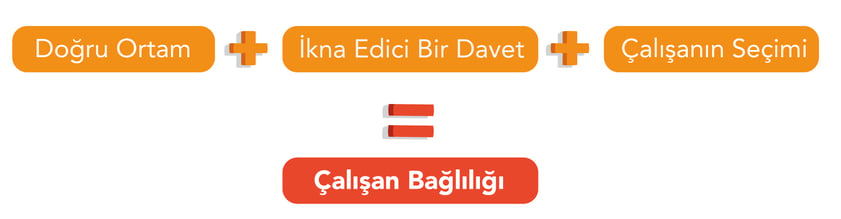
The first element in our equation is the organization's work environment or what we call the " Employee Experience ". The organization's Employee Experience (EX) is created and built primarily by the organization and its executive leadership team (executive leaders). EX is the responsibility of senior leaders. These leaders define the roadmap and set the basic parameters. Various departments such as human resources, organizational development, talent management, learning and development, etc. support the work. Senior leaders should not delegate their responsibilities when it comes to EX. Because only they are responsible for this important element of the organization's strategic vision.
 The second element of our equation, the persuasive invitation, belongs to the operational leaders within the organization. These are the "boots on the ground" managers (Core Leaders) who interact daily and closely with the workforce. Core Leaders are responsible for taking the Employee Experience defined at a higher level and tailoring it to individual situations in the field.
These leaders should not shy away from the conditions defined by senior leaders, but actively improve and fine-tune the Employee Experience to meet the individual needs of their team. We can think of it as the team's Employee Experience or TeamX.
The third element of our equation is employee choice. Employees are of course influenced by the organization and their key leaders, but employee engagement is also 50% the responsibility of the employee. An organization can improve its success in this area by trying to recruit talent by providing the right employee experience, and key leaders can pay attention to creating an employee-friendly environment when building TeamX. Ultimately, however, the choice to be engaged is entirely up to the employee. Employees need to be accountable for their engagement choices.
Senior Leaders and Core Leaders should work with employees to help them understand how and why to choose engagement. But once that invitation is properly extended, leaders have the right to demand accountability, and individual employees must be willing to be accountable for their decisions about whether or not to be engaged. So, let's shorten our equation to see it better:
[Employee Experience + Team Employee Experience + Individual Accountability = Employee Engagement]
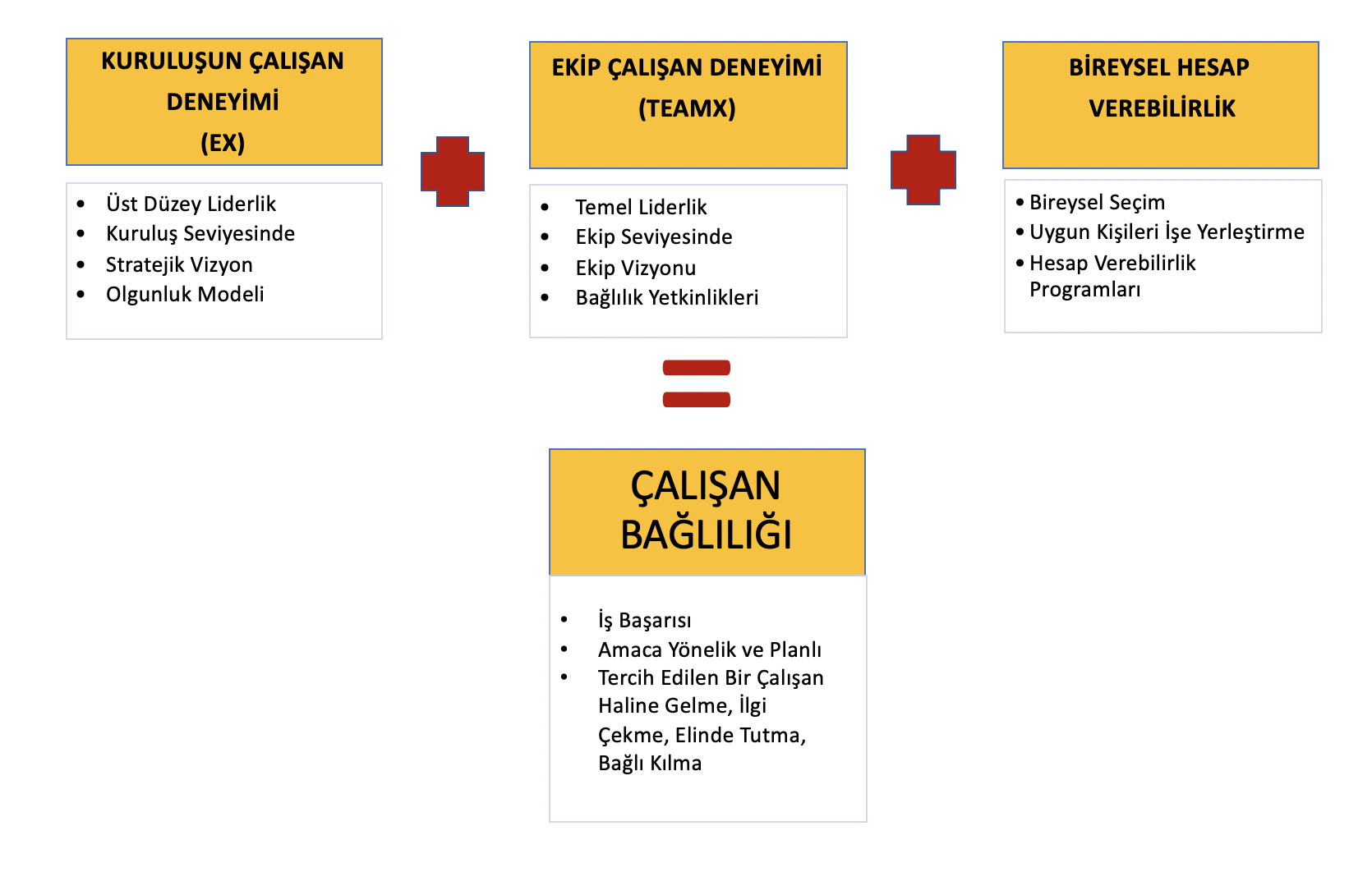
Our equation is very different from what first comes to mind when we talk about employee engagement. Instead of making employee engagement a once-a-year HR-driven activity, this equation gives the primary responsibility for engagement (and the associated benefits) to the organization's leaders, as it should be. In addition, our equation not only gives us a useful definition for leader-driven Employee Engagement, but also helps us to think about how to organize our responsibilities and direct our work at organizational, team and individual levels.
The Starting Point for Workforce Engagement
I imagine some might be bothered by the big "surprise card" in this equation, which is the fact that employee engagement is based on whether or not the employee chooses to be engaged. However, if we start from the premise that employee engagement is leader-driven, then once the other parts of the equation are reasonably established, leaders and organizations at least know where to put accountability. And, instead of waiting and hoping for employee engagement to spontaneously sprout, this equation will help you take deliberate control of your efforts to build employee engagement in your organization, on your team and among your employees.
Meaning, Autonomy, Growth, Influence and Belonging(the tricks we call ENGAGEMENT MAGIC ® or the Magic of Employee Engagement ).
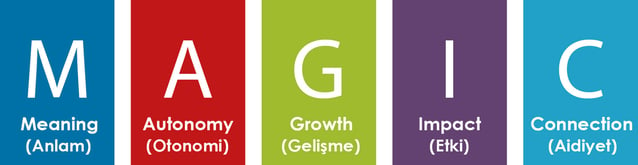
The goal of our work at the Success Program is to help you see the starting point - the Employee Engagement equation - and then help you build the other key factors around those points. Armed with this knowledge, leaders can reap significant benefits from an engaged workforce, rather than hoping to see the light once in a while.
DOWNLOAD EMPLOYEE ENGAGEMENT SAMPLE SURVEY
Related Articles