







 Chat
Chat


We hear a lot about the new normal. For something new to become the new normal, the majority of people need to develop a general habit around it. If our new normal is remote working and managing remote teams, then we need to develop some new management habits around it. I receive many requests for support on this issue, especially from the executives I coach. Since I guess that this is one of the hottest agenda items for many executives at the moment, I share with you below a correspondence we had with an executive on this issue.
Dear Ms. Bahar,
Last week all our employees were sent home again. It looks like we will be working from home again this winter. I manage a small team and I find it very challenging in this working pattern to manage the team in the most effective way, keeping the team upbeat, positive and accountable. Our team is used to working face to face. I think that was the secret of our success in the past. Can you give me any advice on how to manage the team working remotely to achieve the same success now? Especially when everything is so uncertain and stressful!
Director of the New Normal
Dear Director of the New Normal,
Thank you for asking this question at the right time in the process we are going through these days. I think everyone is confused by the rising number of cases in the last weeks, and I think many people feel the uncertainty and stress like you. I congratulate you for not only thinking about your own experiences as an individual in this process, but also worrying about your possible impact on your team as a manager.

While big events like COVID-19 have a lot of negative impacts , I think there are also some good things. It allows people to show their unique colors, and that's where true leaders shine.
I'm going to giveyousome actionable tips tobetter manage a remote team and make a positive impact on your team's health, happiness and productivity. But first, I'd like to talk about some of the data from our survey on the impact of the COVID-19 virus in the workplace.
Here are Some Highlights:
- Most organizations have quickly implemented new measures to keep their employees safe and healthy.
- 1 in 5 employees feel their team members don't have enough "collaboration habits" to work productively from home.
- Employees say that 1 in 5 leaders are either too unprepared or not competent enough to manage remote teams.
As you can imagine, the key is healthy communication: the faster members of a team can talk about something they see going wrong or have a concern about, the healthier and more successful that team is.Teams that are able to have frank and effective dialog always experience higher morale and team cohesion.A study conducted by our partner Vitalsmarts before the pandemicshowed that the challenge of managing remoteteams is not unique to quarantine. Existing problems in relationships are always magnified when people are separated by distance. When people who work from home face any challenges, they struggle more to managethem .To put it in numbers,84% of remote workers say that when they have a concern about something, it lingers for a few days or more and they are unable to turn it into a healthy dialog. 47% even admit that they let the issue drag on for a couple of weeks or more. In addition, business objectives such as productivity, costs, deadlines, morale, stress, and company retention are all negatively impacted moreby remote workers than their on-site counterparts.
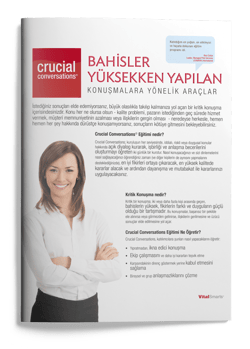 Critical Conversations Training Brochure
Managers in particular play an important role in this. I often find that when managers are excellent models of communication, especially when communication is really transparent and timely, the rest of the team follows suit. The less a manager leaves their employees wondering and hesitating , the better things work.
A manager has a huge impact on their team's ability to engage in dialog and create a collaborative, healthy culture, especially when distance and technology are suddenly part of the equation, as they are now.As a manager of a new normal remote team, I share some tips below that you can try right away. I realize that some of these won't be easy and will require a lot of effort on your part, but the return on that effort can be incredible.
1-Frequent and Consistent Check-ins. Check in with remote workers by checking in with them frequently and regularly. When these check-ins are not only about how the work is going, but also to ask how they are doing, it will play a role in strengthening the relationship. Check-ins can be as frequent as daily, weekly or bi-weekly. However, the secret is to always make these contacts consistently and regularly in the form of meetings or scheduled one-to-one meetings.
2-Face-to-Face or Audio Communication. If face-to-face meetings with remote workers are not possible at all, at least use video conferencing technology or use the telephone to allow colleagues to see each other's faces or hear each other's voices.
3-StrongCommunication Skills. I cannot emphasize enough the importance of excellent communication in remote team management! To do this, first of all,be a great listener, show trust and respect for the other people, get regular updates on work and progress without micromanaging. And don't make the mistake of over-communicating. Sometimes it is enough to get on the phone and then email details to make sure you are on the same page.
4-Clear Expectations.When managing remote teams, be very clear about what your expectations are. This is especially important now, because the "rules" of doing business have suddenly changed. Don't leave people in the dark about projects, roles, deadlines, etc.

5-Always Available. Be quickly available at all times of the day. Make yourself available in multiple time zones and through multiple technologies (Slack, Skype, Email, Phone, Zoom, etc.) to maintain the "open door" policy of the workplace in remote work. Remote workers should be able to rely on you to respond quickly to their immediate concerns.
6-UseTechnologyWell. Try using multiple communication methods to connect with your remote workers. Don't just rely on phone or email, familiarize yourself with video conferencing technologies and various services such as Skype, Slack, Zoom, Go To Meeting.
7-Prioritize Relationships. Team building and building friendships are important for any team. This is also true for remote teams. Make time to build personal connections with remote people.Use some of the contact time I mentioned above to ask your team membersabout their personal lives, families and hobbies. Give your team time to have conversations similar to the ones they have over the tea machine at work, so that the whole team can make personal connections and strengthen relationships.
I wish you the best of luck to overcome the challenges of the new normal.
Bahar Sen
Note: I would love to hear from our readers who have different ideas and practices to overcome the uncertainty, stress and fear we are experiencing today. Please share your suggestions with us in the comment section below.
Other Resources You May Be Interested In: