







 Chat
Chat


 Impact is tied to results. Impact is the small gains that translate into outputs as we move step by step towards the goal. Employees want to see how their work contributes to their personal goals, the success of their team, the people they serve and the company they are part of. It is the difference between going to work every day and knowing that you are part of what happens at work every day.
The Success Programme employee engagement survey results show that managers often don't recognize their employees' contributions to the business. The same results also show that most employees don't know how their work translates into output. A significant part of the day is spent at work. Employees are more willing to contribute to the company's success if management sets goals, clearly articulates expectations, measures success and progress, and ensures that employees can see the progress made.
THE LINK BETWEEN IMPACT AND MEANING
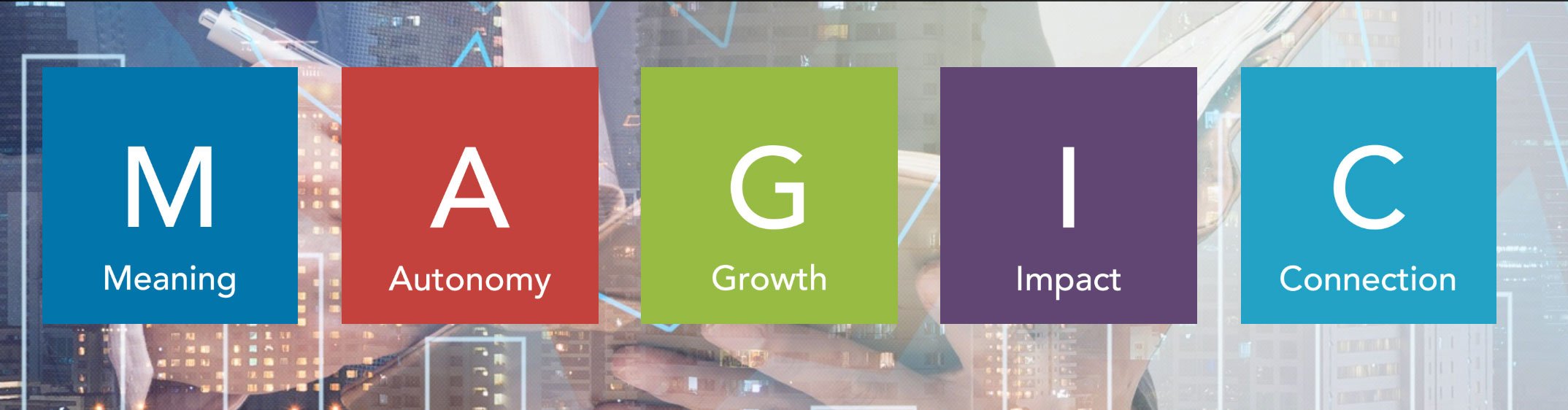
Impact and meaning are closely related. From the employee's perspective, meaning is "Why" I am doing what I am doing and impact is "What" I am doing, or "What are the results of what I am doing". When these two closely related ENGAGEMENT MAGIC factors are combined, the result is the following: "Why am I doing this? I am doing it for impact in a way that is aligned with my values and motivations."
Dr. Tracy Maylett analyzed DecisionWise survey data to createENGAGEMENT MAGIC®: Five Keys to Unlock the Power of Employee Engagement, Dr. Tracy Maylett analyzed DecisionWise survey data and showed us that "Impact" and "Meaning" are separate but mutually reinforcing factors that need to be focused on in their own right. The Success Programme employee engagement survey therefore includes questions designed to measure both meaning and impact.
THE ROLE OF MANAGERS AND EMPLOYEES IN CREATING IMPACT
Managers or supervisors have a responsibility to create an environment where employees can see the impact of their work. In order for employees to see the impact of their work, managers need to set goals and a shared vision.
Employees have the opportunity and responsibility to participate in the environment created by their manager. Employees are expected to understand and commit to company and team goals. If employees cannot see the impact or outcome of their work, they should ask their manager how their work affects the overall goals and strategies of the company.
Like other factors of employee engagement, "Impact" involves 50/50 responsibility.
the manager provides the environment; the employee chooses whether or not to be involved.
CELEBRATING SUCCESS

Most people, especially "Achievers", have become "successful" by setting high goals for themselves, identifying what didn't work and didn't bring results while trying to achieve them, and closing the gap with continuous improvement. Unfortunately, I often find that people don't appreciate the progress they have made because they are stuck in a cycle. They talk about the next goal or stage without even realizing the impact they have created.
It's interesting how we set goals for ourselves and then we realize that reaching that goal is not enough and we set another goal before we can enjoy our success.
The perfect balance is when we set goals and then take the time to celebrate when we achieve them.
Managers can help employees slow down by saying, "Thank you for doing this work. What did you get out of it?" It's not just the experiences we have, it's the lessons we learn from our experiences. It's not just achieving goals, it's the progress we make and the changes we make on the way to those goals.
When we talk about the lessons we have learned from our experiences, we can slow down a bit; we need to see the impact we have made, look at what we have learned, make changes and then set new goals. First of all, we need to learn to slow down a bit.
REWARD AND APPRECIATION

If you want your employees to realize the impact they are making, you need to have a clear vision and specific goals and objectives. If a manager wants to, they can create a space where impact can be measured. If the manager sets goals and tells how they will be measured, employees can set goals for themselves that are in line with the company goals. If employees do not have clear goals, then it is difficult to recognize their progress, it is necessary to guide them back to the common goal when they deviate from it and to recognize them when they achieve it.
To create impact, goals, rewards and expectations need to be communicated by management. Be clear about what you want to achieve, set the context, set the goal and provide feedback along the way. This feedback should be both reinforcing, like "You are on the right track", and directive, like "You need to make some more changes".
CREATING IMPACT AND YOUR MOTIVATIONS
When I think of impactful motivations, I think of Habitat for Humanity . When people motivated by idealism volunteer with them, they can easily see the impact and results of their work. They do something for a good cause to feed their high social justice needs. The end result is something: you have built a house, or at least installed a window or a door. They can see how your impact serves the whole: "Someone is going to live in this house, and I was part of building it."
This is a good example of "making an impact by helping." It is also building a house for others in order to fulfill an inner need (to find meaning), and it is a good example to see the meaning-impact context. When people feel that they are helping for an inner purpose and there is a result, it makes them feel fulfilled. These examples can be multiplied, the important thing is to find Meaning, that is, to see how everything is connected to your intrinsic motivations. You can read more about this in our articles Finding Meaning in Work and Who I Am .
INFLUENCE DRIVES ENGAGEMENT

We work with many companies in the manufacturing industry that employ workers on assembly lines. When workers feel like they are just a small part of a whole and can't see their impact on the outcome, it is very difficult for them to connect with their work and see the impact of their work on the whole.
The solution we found was to take people from the production line to the final output (which can be anything) and let them see what that output adds to people's lives. As a manager, it is extremely important to be aware that employees can see the life cycle of a product and its impact on the customer.
EFFORT AND IMPACT
Finally, remember the relationship between effort and impact. If you put in a lot of effort but don't see the same level of impact, you may experience a kind of burnout syndrome. - and this will reduce your motivation to do your best. On the other hand, if you are not putting in enough effort and not making an impact, you become complacent. Or you are putting in little effort and getting good results, which is too easy and not enough to motivate you.
A situation where you see the impact that comes from making a significant effort shows how impact creates engagement. An environment where managers and employees strike the right balance between impact and effort is always ideal.
Other Articles You May Be Interested In
Related Articles