







 WhatsApp

This article by JOSH BERSIN has been localized by Bahar Sen.
The market for "Leadership Development Programs" is enormous: Companies spend more than $14 billion on leadership development, and there are more than 70,000 books and videos on the subject. When we ask companies what their most pressing staffing challenges are, "Growing New Leaders from the Infrastructure" always ranks at the top. (According to last year's figures, only 14% of companies have a strong "pipeline" of "next generation" leaders, two-thirds need a new leadership model, and 64% say their top challenge is to grow the "next generation" of leaders.)
Why is leadership and leadership skills such a burning issue? Simply put, companies everywhere now need a new type of leader. As company structures become more horizontal and dynamic, all employees, whether blue-collar or white-collar, are moving into leadership positions in some way, whether as a supervisor, manager or project leader. Thus, leaders are getting younger and more numerous.
When I look at the leadership models that companies are building today, I see a focus on leading within a network, getting results through influencing other people, building inclusive teams, and staying close to customers in an environment of constant disruption and change. This is a far cry from the leadership models of the past, which I generally refer to as "positional leadership." (In the old model, you led based on your intelligence, title, and position in the business.) Today, good leaders create change by focusing on their reputation, their ability to empower people, their desire to experiment, and their focus on developing people and their teams.
In some ways this seems to us to be something different and new, but in some ways it is not. Good leaders have always been good at this; it is only in the traditional model that these traits have taken a back seat.
The Traditional (Old) Model of Leadership Development
Most leadership strategies come from Ram Charan's famous book "The Leadership Pipeline". The book identifies five types of leaders and details a slow, steady, upward sloping model that develops leaders over time:
Managing a Business (Profit, Loss)
At each stage of this hierarchy the story continues, you learn new things. For example: from individual to supervisor you learn how to manage and coach people. When you become a manager of managers, you learn how to budget and how to select leaders. As a business or function manager, you need to learn how to budget, create value and increase profits. As a venture manager, you need to learn how to run a multifunctional venture.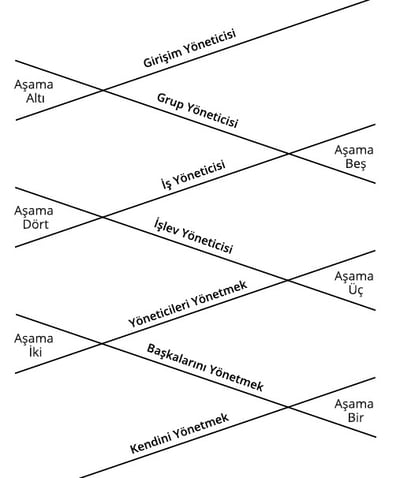
In this traditional model, we assume that it will take decades to climb the rungs of the ladder, and we use a 9-box table to show who is ready for what. While I personally have never been a big fan of this approach, the 9 boxes are still widely used because they help us distinguish between "performance" and "leadership potential", which have always been considered separate things.
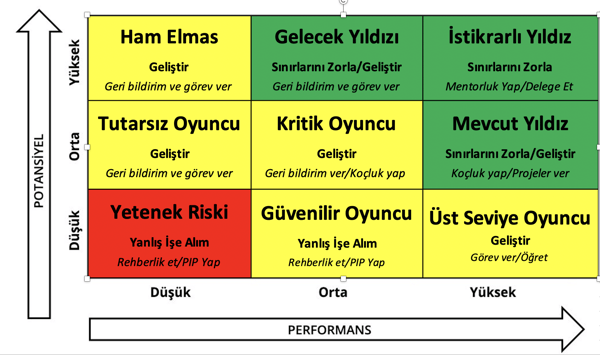
The most dubious aspect of the 9 box table is that it is often based on weak assumptions. The first of these assumptions is that "potential" here is defined as the "ability to be promoted", which usually implies an administrative role. This never fully reflects the different types of "potential" we have, such as the potential to "sell more, engineer better, develop further".But this approach has allowed us to separate "Improvement Potential" from "Current Performance".
I have always believed that everyone has unlimited potential, as long as we can identify the different ways in which people can contribute to the business. These 9 boxes limit the potential to "the ability to develop at two levels in the company", which of course is itself a limited idea.
All this comes from the idea that we have "professional careers" and "managerial careers", which are two separate things. In this model, "managers" sit behind a desk and "manage," while employees and staff "do the work."
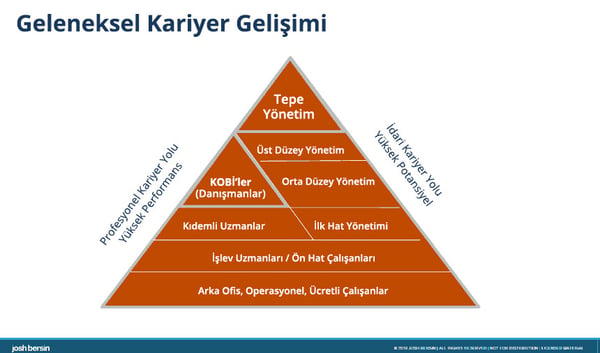
We have therefore built career models that follow two different paths. In the traditional model, leadership development is a step-by-step, designed process. Most executives have participated in years-long "leadership development programs" that, over time, evolved from teaching supervisory skills to teaching business, strategy, operations and finance.
This is of course a ridiculous idea today; many engineers, production specialists, operations people and salespeople make a lot of money and add a significant amount of value to the company. Some of these people may never want to engage in "management" and it may be good for us that they don't. But since leadership development is based on this path, training and development is based on such a process. So what do we do with the 28-year-old CEO running a billion-dollar company? Such people exist, and they usually do a pretty good job - if we support them to learn on the job.
I'm not saying that the traditional leadership model is dead, but I am saying that this "long-term" approach to leadership development is out of step with the times as companies redefine their business models every few years, create new and agile organizational models, and design solutions based on data and customer experience.
The World is Different Now: Much Different
The world today is vastly different. While there are still hierarchies in many companies (and they are rapidly simplifying; HPE has reduced its executive ranks from 62 to 15), hierarchy no longer determines how work gets done. People work in cross-functional teams, on projects, and the sheer amount of impact they have, especially if they are technical or customer experts, can be independent of their rank.
Gone is the idea that "leaders are more valuable than individuals". Many companies now pay superstar software engineers hundreds of thousands (or even millions) of dollars, while their executives earn far less. In fact, today we can say that everyone is a leader at some point in their career; it's just that some of us also have "professional management" responsibilities as part of what we do.
We also need to recognize that the model of "preparing people for leadership" is an old idea. Management, such as HR leadership for example, is a "craft" rather than a "profession". In other words, you learn as you do it, through coaching and apprenticeship, learning from your mistakes. Those of us who have led teams remember times when we hired the wrong person, didn't treat someone effectively, or set goals and directions that didn't go the way we thought they would. Over time, we learn to do the job better, recognizing that the "right leadership approach" will vary by situation, culture and organization.
The idea of creating a pool of leadership from the infrastructure through "development programs" and a "well-defined list of experiences" is no longer enough: we need to help employees through mentoring, coaching, exposure to real situations internally and externally. In fact, one of the most important studies on employee development found that "exposure" is one of the most important factors in development. You cannot be ready for a person or situation without being exposed to it!
As for coaching, according to the DDI, E-Y study, mentoring (or coaching) is one of the most valuable tools we have at our disposal.This study found thatin formally mentored organizations, staff turnover is 20% lower, leadership quality is 46% higher, and positions are filled 23% faster. So rather than offering people development pathways, we need to offer them leadership coaching services and development coaches !
What is happening in leadership development today is very similar to what is happening in the military: We need to "throw people overboard" and then "teach them to swim". I think the most effective companies today are promoting people to leadership before they are ready, and giving them the tools and support to learn on the job, innovate and embrace their work over time. "Waiting for someone to be ready" causes the organization to fall behind (and people get impatient).
For example, academies are designing development programs that cover all new areas of HR so that HR professionals can "learn as needed in leadership development areas". Of course, to be a successful HR leader you need to know HR processes, leadership and consulting skills, but instead of spending 15 years developing these skills, we would rather you learn them now, while it is still early, from a program. Then you can develop your "craft" through experience, new assignments and various roles in different companies.
What's Next? A New Approach: The Four E's of Leadership Development
So how do we deal with this change? A whole new approach is needed. Yes, companies still have to follow leaders and develop leaders for every important role in the company. But instead of putting people through a "leadership development machine" like the model above, we need to do it in a more agile way.
Remember that "learning to lead" is a long journey for everyone, and we want to facilitate it in a strategic and mission-aligned way. I think ultimately it all boils down to four main things. I call them the four E's.
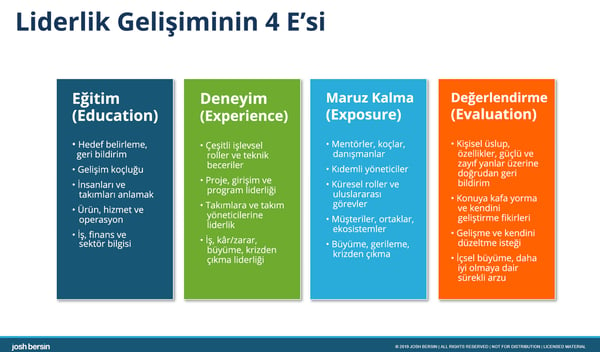
The first is E-education and thisis where most service providers, academic institutions and books focus. Everyone in business needs training in business, in goal setting, in the process of developing people, and in the product, service and operational dynamics of the company. All these things are needed over time, but remember that being a leader is not only about managing people, but also about getting the job done successfully. So the first thing to do is to ensure that leaders learn how to "get the job done" and "lead people".
The second part of the journeyis experience. Leadership can only be learned by doing. As Colin Powell once said, you know someone is a good leader when they have followers. Some of us are "born leaders" but most of us learn it over time. As you lead a project, program, team or operational solution, you learn to do it better the next time.
The third stage of the journey isexposure. The best lessons about leadership come from observing, talking to and getting feedback from others. Early in my career, for almost two years, I worked as an assistant to IBM's senior manager for the western regions. During that time, I saw him in dozens of difficult situations, often leading meetings or doing projects at his request. This was one of the most important experiences that helped me build my confidence.
The fourth stage of the journey isevaluation. We used to do 360 feedback surveys (many companies still do) to help leaders with very specific issues. We all need a coach, a feedback tool and often an assessment, psychological or otherwise, to find our blind spots. As academics often say, we all suffer from something called the "curse of expertise": The moment we think we are good at something, we stop bothering to learn. When it comes to leadership, this is a terrible problem, so we all need constant coaching, feedback, assessment and sane advice to improve.
How do we do this in today's agile and ever-changing companies? We need a whole new set of "tools and practices" to succeed. Traditional service providers (Korn Ferry, DDI, BTS, Vitalsmarts, LinkedIn) and academics (all major universities) are full of solutions for the first category. But the moment you finish "training" and go beyond, you are on your own, one way or another. That's why leadership development is so difficult but exciting.
What's Next? New solutions are coming...
So how can companies develop leaders faster? There are a number of new solutions. Here are a few of them:
1.BetterUp: Applying Artificial Intelligence and Positive Psychology to Coaching (The Uber of Coaching)
The first company I want to talk about is BetterUp, which has revolutionized the coaching market. BetterUp started with the idea that positive coaching is one of the most valuable tools for development and designed an AI-based solution that allows individuals to self-assess their coaching needs, then find and select suitable coaches from a network of trained coaches, and support a coaching session over the phone or the internet.
Before BetterUp, the coaching industry was a highly fragmented sector of small startups (much like the market for psychologists and counselors, which SpringHealthtreats in the same way). With BetterUp, any company can now be part of the network, and all leaders (at any level) can engage with expert coaches based on their and their organization's needs.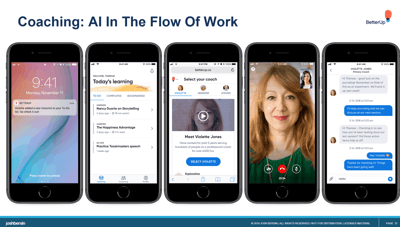
The best thing about BetterUp is that it is not just an interesting idea. The company has developed in-depth research and built a great business that is growing fast. BetterUp recently received $103 million in venture funding and is now valued at over $700 million (much larger than almost any other leadership development company).
Why this high valuation? The BetterUp solution is one of the most innovative solutions to the "Experience" and "Assessment" problems of development. It is also easy to use, highly effective and research-proven. The company has customers such as AirBnb, Mars, Workday, Logitech, Warner Brothers, Capital One.
BetterUp not only connects emerging leaders with expert coaches, the app now offers micro-learning, prompting, reminding and assessment tools to help you learn and improve. I consulted with BetterUp for almost two years and was impressed by the level of knowledge and focus on quality in the company. Today BetterUp has more than 300 employees and more than 1,000 coaches in its network.
There are other similar networked leadership coaching solutions like Bravely,Lumen,Leaderjam,Coach.me andEverwise that excite me, but none of them can match BetterUp.
2. Exposure Learning: STRIVR, Mursion, VantagePoint and others
The second category of groundbreaking new leadership solutions is the rapidly growing category of virtual reality-based solutions (i.e. learning through exposure).
If we look at the model above, in the leadership world we need to offer people face-to-face coaching, feedback, reflection time and the opportunity to make mistakes. But instead of expecting them to actually make mistakes, can't we give them an opportunity to simulate difficult situations (which is exactly what pilots do!)?
Now there are great virtual reality tools to do just that. The market-leading STRIVR labs have been offering human skills training (job interviews, dealing with difficult situations, managing conflicts, etc.) for several years now, and the experience has been perfected. So I sat down and tried the STRIVR simulations and it gave me an incredible perspective on how I avoid confrontation in difficult situations (a problem I've been working on for years).
.png?width=300&name=image%20(3).png)
Another pioneer, Mursion, offers real situations monitored and managed by coaches through virtual avatars. It's a virtual coaching system that uses real coaches, but leverages avatars for scale and meaning (for example: if you want to learn how to manage a diverse team, a black employee can confront you about an issue). I tried Mursion myself and I sweated (and learned) a lot!
Third company leading the way in providing "workflow" learning solutions: Vantage Point. This is a company that designs virtual reality programs for a variety of topics such as diversity, management, teamwork, harassment, and other skills that are difficult to teach in the classroom.
3.New Action Platforms from Glint, CultureAmp, BetterWorks, Reflektiv, Humu, Kazoo, ADP and Others
The third category of leadership development solutions is anew generation of performance management tools from vendors such as Glint, BetterWorks, CultureAmp (Zugata). These companies are designing agile goal-setting and performance management tools that go beyond performance management and offer real solutions focused on performance improvement, in addition to building real-time 9-box tables and other potential models.
I call them "action platforms" because they are designed to enable you to "take action".
This new generation of performance management tools goes far beyond performance appraisals. Not only do they help employees and managers set goals, share progress and results, and assess performance and potential, they now include built-in survey and AI-based assessment tools that allow employees to evaluate and give direct feedback to managers.
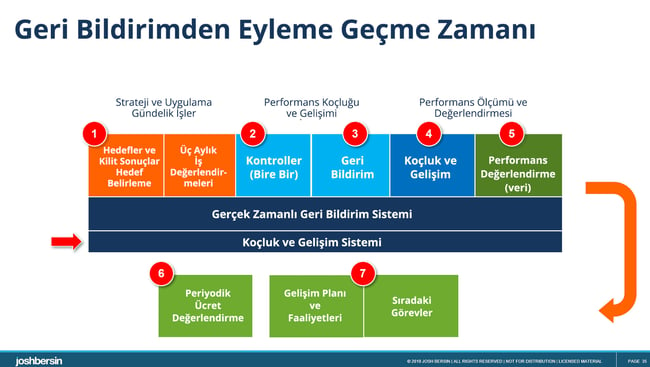
Zugata, a technology company recently acquired by CultureAmp , collects data from your colleagues on your strengths and weaknesses (ADP's Compass does the same thing) and gives you real-time, coachable, positive development tips (much like 360 does). These tools are in the process of moving from being "performance and feedback" systems to "action platforms" that provide direct feedback on how you can improve as a leader. Glint collects real-time data from employee surveys and offers managers their own coaching dashboards with micro-learning links. BetterWorks and others are working on the same topic.
These platforms are not leadership development programs per se, but they are better in many ways. By focusing on the "experience" part of learning, they give managers (and their teammates) direct feedback during the workflow, based on data collected from employees, colleagues and others they work with every day.
4.A World of Self-Directed Learning and Coaching Tools
We are now surrounded by tools, platforms and content providers offering a variety of self-directed learning opportunities. These include new providers such as LinkedIn Learning, Udemy, Skillsoft, Novoed, Harvard Publishing and Hone. Hone is particularly interesting because it was founded by a tech entrepreneur and brings together a highly skilled network of leadership development experts in an online, live learning experience. You can assess your skills and enroll in real-time Hone classes from your computer, gaining access to world-renowned trainers and coaches in the workflow.
In a nutshell You are the Boss of Your Leadership Program
There are so many new options now. Data-driven tools can measure your strengths and weaknesses, connect you with coaches and give you little nudges and tips. You can simulate and practice difficult situations as if they were real. For us managers and leaders, we can get feedback in the workflow.
While the traditional approach to leadership development has not disappeared, it is time to rethink your approach. Talk to your managers about the leadership values you want to reinforce and interweave them into performance, development and promotion conversations.
"Leadership development is bankrupt" may be a topic of conversation for years to come. But the most important thing to do right now is to "let bygones be bygones" and as much as possible abandon step-by-step intermittent solutions and develop skills at work, in the flow and in real life.
Let me make one last point.None of these ideas, tools, platforms will workunless your senior executives recognize that developing and coaching leaders is a vital part of their job. Ensure that your CEO and other leaders take this challenge seriously, invest time in leadership coaching and leading by example, and allow people to "learn from their mistakes on the job," move from one role to another, and learn as fast as possible how to lead in the 21st century.
Given the concerns companies have about preparing a strong leadership pool for the digital age, now is a good time to rethink the approach and focus on "in-flow" leadership development for everyone in the company.

Other blogs you may be interested in:
Executive Coaching
4 Keys to Executive Coaching
6 Reasons to Work with an Executive Coach
5 Criteria for Effective Coaching as a Leader
The Relationship Between Leadership and Digital Transformation
Podcast: Are There 2 Million Leaders in This Country?
Related Articles