









 WhatsApp

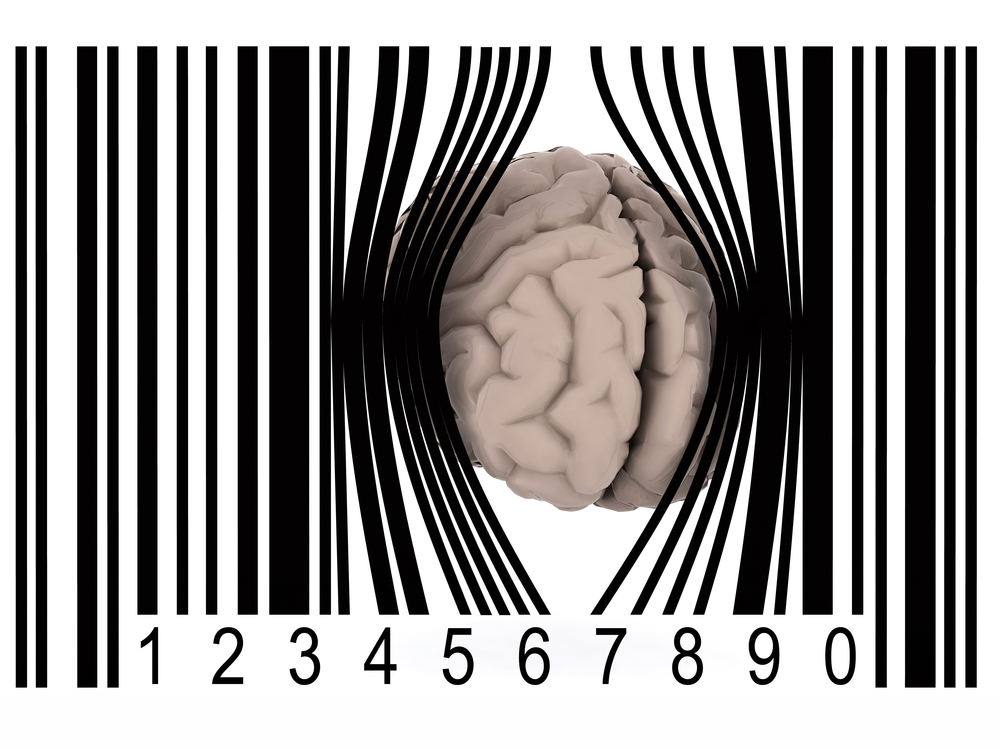
Today I would like to give you some information about my special interest, "The Human Brain". The brain is truly a miraculous organ. The respected neuroscientist V. S. Ramachandran states: "In a single part of your brain the size of a grain of sand, there are a hundred thousand neurons, two million axons and a billion synapses 'talking' to each other."

While we are now beginning to get a glimpse of how the brain works, we have not yet fully grasped the concept of perception, the process of gaining awareness or understanding through sensory data.Ramachandran is best known for his book "Ghosts in the Brain" . The bookis based on the author'swork with patients who have experienced amputationor paralysis. These patients often experience some or all of the normal sensations of the missing or paralyzed limb, such as pain, itching, etc. Ramachandran explains that this is due to the brain's "body image", a description that includes the missing limb, such as an arm, leg, finger, etc. While some argue that this perception is due to the person's denial of the loss of the limb, Ramachandran says that even those who were born with missing limbs (who never knew what it was like to live with them) have vivid sensations of the limb in question. He cites the case of a little girl who was born without arms and uses her "fingers" to do simple math. This suggests that the brain is designed to coordinate all limbs. Even in the case of amputation, it takes time for the brain to adjust to the fact that the limb is no longer there.
The work of Ramachandran and other neuroscientists also seems to prove Freud's theory of our brain's defense mechanisms. In this theory, Freud says that our brain's defense mechanisms develop thoughts, perceptions and behaviors that are constantly looking for "evidence" that supports our perception of ourselves and inventing it when there is no real evidence. In other words,we will do anything to protect our sense of self and who we think we are.
We have seen evidence time and time again in business that leaders are often the most effective leaders when their perceptions of their own performance and behaviors align with other people's perceptions of them. This is supported by a great deal of research on performance and emotional intelligence. Self-awareness seems to be a key component of this.
Coaching Ghost Managers
Accordingly, one of the main roles of an executive coach is to help the individual they are coaching to bring their self-perception and reality closer together. About 78% of 360-degree feedback participants rated themselves significantly differently from how others rated them. Most coaches know that these differences in perception can actually be both a cause and a consequence of performance issues. However, the natural defense mechanisms I mentioned earlier are always at work to protect the "sense of self". What this means is this: Our natural instincts reject any information that contradicts the image we have in our brain of our own identity (remember phantom limbs). My feeling is that this is where many coaches fail.

Coaches often fail to take into account this natural tendency of individuals to protect their sense of self. Instead of acknowledging this, many coaches resort to straight logic to deal with this difference in perception.They think that providing evidence of an individual's underperformance, such as a "360-degree feedback report, performance appraisal results, or some behavioral examples" will be enough for that manager to accept reality and move on. However, just as the brain cannot adapt to a phantom limb, it is not easy for individuals to accept a perspective that contradicts their perception of their own performance. The coach should understand thatin order to create change, it is much more effective to point out the differences between one's perception and reality in a simple and logical way, rather than simply pointing out the differences in performance that do not meet expectations, while at the same time protecting one's sense of self. In this way, the expected behavioral change can be achieved much more easily and quickly. The "Oh by the way, you don't have an arm" approach, which is widely used by many coaches today, does little to help an individual face reality and make lasting changes.
If you want your leaders to let go of the ghost thoughts they have about their "leadership" and start performing and behaving as expected, it is time to start working with an executive coach who will take this approach.


Other blogs that may interest you:
5 Criteria for Effective Coaching as a Leader
Why Most Coaching Models Don't Work
What are the Benefits of Coaching?
Executive Coaching
6 Reasons to Work with an Executive Coach
Related Articles