







 WhatsApp


This blog was written by Josh Bersin and localized by Bahar Sen.
Over the past months, we've spoken to dozens of HR professionals about the challenges in the human capital space and the need to transform HR. Companies are redesigninginternal roles, updating the skills of their teams, trying to improve employee engagement and well-being , creatingnew feedback programs, and re-evaluating the roles of their leaders.
But none of these efforts are as transformative and disruptive as the explosive impact of AI.
When I first discussed AI, I called it a "killer app" because it had the potential to change everything we do. Today, AI has infiltrated our lives, changing the way we shop, drive, communicate and manage our health. And as AI applications evolve, so do the new ideas people come up with and the investments they make. ( Softbank, for example , has just allocated $108 billion to AI investments. See market capitalization below.)
But the excitement of many vendors aside, AI is not something that can be "bought"; rather, it is embedded in all the technologies we use. AI tools use available data (i.e. quality data is necessary for AI to work) to make smarter predictions, suggestions, recommendations, advice, information and responses to people.


Many companies have begun to leverage AI heavily in HR. IBM, for example, has redesigned its HR service strategy, using intelligent tools to help employees and managers respond and make decisions about roles, careers, pay and learning. United Health Group is building a graph database that uses AI to identify opportunities to improve efficiency and service quality. McKesson is using AI to understand employee relationships and improve diversity and team effectiveness.
AI will change every process that HR managers touch. AI is now driving the way we find, assess, hire, train, develop, pay, and replace prospective employees.
Last week, for example, I facilitated a meeting on the changing responsibilities of the HR business partner role - an important role that is being radically transformed by AI-driven chatbots and intelligent platforms that are making it increasingly easy for employees and managers to get the information they need directly.
A global survey by Harris Insights found that more than 80 percent of employees in the U.S. and U.K. think that having AI skills is a competitive advantage for their company, while 42 percent believe that HR departments can't implement it. A PwC survey of CEOs found that 63 percent of respondents are reviewing the role of their HR department in light of new AI technologies and staffing needs.
 HR today has a responsibility to build trust systems, intelligence systems and much better predictive systems to guide hiring decisions . One of my oldest friends in the industry, Rich Hughes (head of HR strategy at United Health Group), is collecting massive amounts of employee data in a graphical database that will help companies better understand, predict and improve performance in customer service, insurance claims and many other areas. JP Morgan Chase and others are doing the same thing, so this is the new direction HR is going.
To get there, we must prepare ourselves for disruptive change, both in the industry itself and in all functional areas of HR. In my 25 years as an analyst, I have witnessed many transformative changes. I believe AI will be the most impactful change yet.
How Big is the Artificial Intelligence Market?
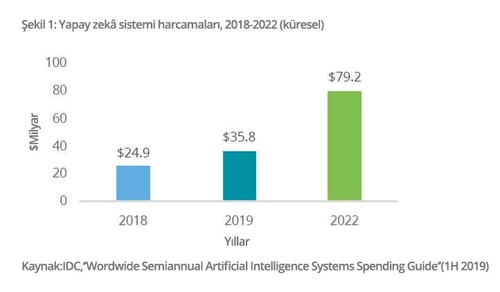
1-Market volume: IDC forecasts that the market for AI products and services is growing at 38% annually and will reach $79 billion by 2022. 40% of this will be software.
2-Adoption: Gartner research shows that only 14% of companies have adopted AI today, while 29% have expectations for 2020. So the market is quite fresh.
3- Startup companies: According to Tracxn, there are 11,000 AI startup companies today.
4-Success: Companies like Bank of America are already using AI-based chatbots for customer and employee service. Their system, called Erica, handles more than 7 million requests a year.
Other Blogs You May Be Interested In:
The Relationship Between Leadership and Digital Transformation
Ray Kurzweil Predicts 3 Technologies Will Determine Our Future
Workplace Harassment, Diversity and Inclusion: New Tools
Why Leadership Development is Bankrupt And How Do We Fix It?
Employee Experience: It's More Complex (And More Important) Than You Think
Related Articles


-2.jpeg)