







 WhatsApp


We make a lot of agreements in our lives. Some of them are related to the work we do, some of them are personal, and some of them are made in order to deeply understand the expectations in a relationship. What we call an agreement is all of the explicit and implicit expectations that determine the rules of a relationship, and whether we realize it or not, there is an agreement in every relationship.
Some agreements are based only on perception. For example, our admiration for a brand's social responsibility project that we see on TV or social media, or our admiration for the originality of its designs. We call this bond between us and brands that we think appeal to our values a brand contract .
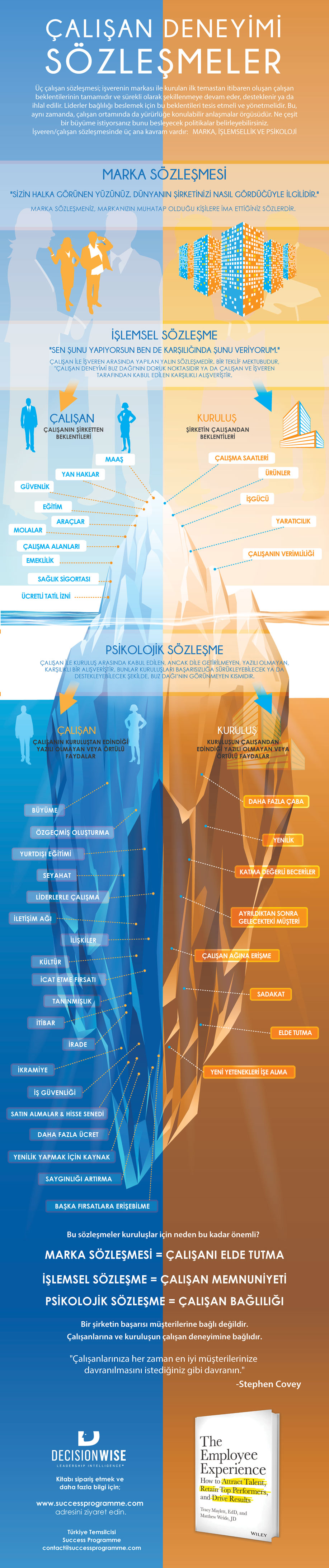
Some agreements are more explicit, visible and clearly understood by all parties to the relationship, such as a written sales agreement for a product or service you buy from a company, or an employment contract that spells out a new employee's job description, salary and bonus structure, if you do this, I'll give you that, and so on. Just like the tip of the iceberg, all parties see and understand this part of the agreement. Expectations are clearly laid out and clearly defined. In the HR world, this is the category of employment agreements with employees that wecall "Transactional Agreements". As you know, there is a much larger part of the iceberg in the depths of the water and this part is invisible to the eye. We call this part of the agreement: "Psychological Contract". These are implicit expectations that are not clearly and explicitly defined but still exist in every organization and relationship.
So every relationship has an agreement and every agreement has 3 sub-contracts. So if we are talking about a labor agreement, what do these 3 sub-contracts mean?
The agreement between the employee and the employer is like an iceberg, only the transactional part of the agreement, the employment contract part, is clearly visible to the parties involved. But not every expectation is included in this written agreement. The implicit part of any agreement is the unconscious and unspoken expectations that all parties bring to the relationship. These implicit agreements are of the kind that our grandparents once told us were done with a handshake, i.e. they have no formality other than a mutual belief that each party will act in the best interests of both parties. The degree to which the terms of these 3 contracts are met determines the employee experience in a company. If we take a look at these 3 contracts that define the employee experience in a company;


1-Brand Agreement:
The Brand Agreement is how our company is viewed from the outside or how we are seen by others. The brand is made up of the promises that our identity - what we claim to be and what we stand for as an organization or team - creates in those who encounter it. The brand contract attracts potential workforce, attracts employees to the organization and helps retain them.
2-Transactional Agreement:
The Transactional Agreement is a mutually agreed, bilateral and open agreement between the employee and the organization that sets out the basic operating conditions of the relationship. the clauses in this agreement and compliance with these terms ensure employee satisfaction.
3-Psychological Contract:
The Psychological Contract is an unwritten, implicit set of expectations and obligations that determine the terms of exchange in the organization's relationship with the employee. Trust is everything in this psychological or implicit agreement. Without trust, there is no work. The organization's compliance with the psychological contract creates employee loyalty.
Organizations that manage these 3 contracts well ensure a good employee experience, which in turn ensures a good customer experience. If you want to grow, as Stephen Covey says; always treat your employees as you would want your best customers to be treated.
Related Articles