







 WhatsApp


When employees find belonging in their work, they begin to generate new ideas, find lasting solutions to problems, care about customers, and act in a way that prioritizes the organization's interests as much as their own. They are proud of where they work and their work, and feel comfortable sharing their experiences with others.
They give themselves fully to their work. Employees become ambassadors of the organization, they see themselves as part of the organization and therefore other people begin to perceive the organization through the eyes of the employees. Leaders know that employees are not just part of the organization, they are brand ambassadors.
WHY DOES BELONGING AT WORK MATTER?
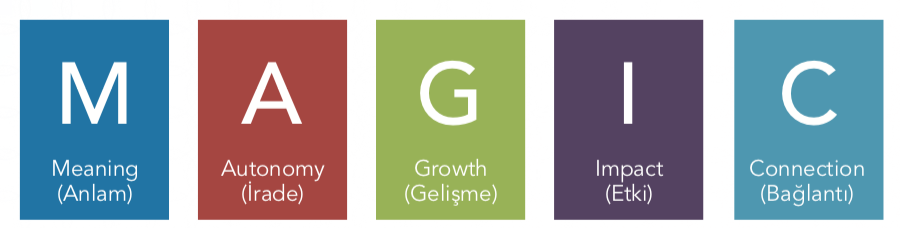
Belonging is relatively underrated among the following factors of our employee engagement model ENGAGEMENT MAGIC®. We often think about the meaning of our work, its impact, its contribution to development, but not so much about belonging. Do I have a belonging relationship with the organization? Does the organization have a sense of belonging with me? We don't ask ourselves these questions very often.
I think the essence of belonging is having a mentor or a partner you trust in your work. There is nothing more isolating and lonely than spending 8-10 hours a day at the workplace and not feeling personally or socially connected to anyone or any organization, or not feeling that you belong there.

WHY IS IT IMPORTANT TO HAVE A PARTNER AT WORK?
Is it important to have a close friend at work? Some of you will say no, but I think it is very important to have one or a few people that you can trust and relate to. If I give an example from myself; I am an introvert, but even though I prefer to be an introvert, having someone I feel close to and trust at work improves me. In one of the companies I worked for, I developed a strong friendship with one of my colleagues. We were both of similar ages and going through similar processes. At that time, the company had a lot of challenges to overcome because global decisions were leading to short-term tactics rather than transforming the organization into a sustainable structure, and as a result, all teams were worn out.
The rapid changes and uncertainties were especially worrying for the newcomers. When we were going through these difficult times, it was good to have a partner a few tables away. We would have lunch together and share ideas and how to deal with the challenges we faced. It was not uncommon to get a late night phone call and ask, "I just thought of something, what do you think about it". Neither of us was overcome by the fear of losing our jobs, and we could talk freely about what needed to be done to help the company achieve its goals. Our sense of belonging to the company made us embrace it as our own. Personal concerns and career plans were not our first priority. Of course, there were other people with whom I was able to achieve a similar sense of commitment and belonging, and this belonging relationship was absolutely crucial.
If I compare this experience with a different company I worked for, there was a slightly different culture. Most of the employees were in a mood as if they were working there temporarily. There was an innkeeper-passenger situation. The turnover rate was very high. A few critical people were carrying the company on their backs. Ownership was very low throughout the company. I would ask myself, "Who should I talk to about this?" but I wouldn't because I wasn't sure who the right person was. Compared to my other experiences, it was more difficult to establish a sense of belonging in this company. I don't necessarily mean that you should have close friends at work or that you should always be social and go to parties after work. In my opinion, it's very important to have someone you trust at work with whom you can have a conversation.
VALUES AND BELONGING
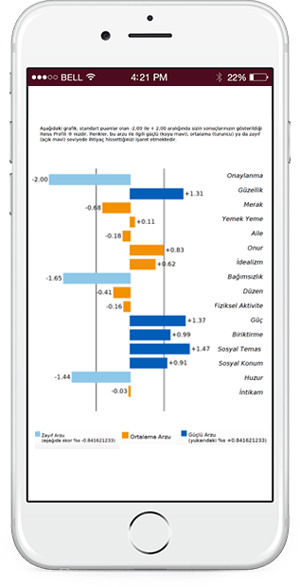 All our experience over the years has shown us that both employers and employees have equal responsibility for employee engagement. Half of the responsibility lies with the organization and the other half with the employee. The organization must clearly explain its values to employees and give them the opportunity to connect and align with them. But most importantly, the company and its leaders must first and foremost demonstrate and role model these values.
In one of the companies I worked for, I realized over the years that there was a disconnect between the values of the company and some of my most important values. To be honest, it is not easy to understand this disconnect. Sometimes years go by and you can even retire from that company. Most people realize that something is bothering them, but they can't identify the root cause. However, if you clarify your own values and motivations, and then understand the values and motivations of the company and especially of the people you work with one-on-one, the difference will show the cause of your discomfort.
I made a similar assessment and over time this made me realize that the company I was working for was no longer a good fit for me. My decision to leave was not an emotional one, but rather a very refreshing one. And over time, I realized that if there is a mismatch between you and the values of the company, it is not possible to create a sense of belonging with colleagues who are not mismatched with the values of the company. It doesn't mean that other people working in that company have the wrong values, it just means that there is a difference between your life choices and the life choices of others. But this makes you feel like you are in a place where you don't belong.
In terms of company values, employees should first look at their own values and whether they are in line with what the company offers. This is an important basis for making employees want to stay there. Establishing a relationship of belonging with people close to your own values within the company is very important during your stay in that company, but if there is a mismatch between you and the company values, having only one or two close friends close to your own values will not help you stay in that company, it will only prolong your stay there a little.
THE COMPATIBILITY OF YOUR PERSONALITY TRAITS AND THE COMPANY CULTURE
We often talk about the fit between people and their work. This fit is critical for belonging. The key question you need to ask yourself is "yes, I really belong to this company and my company sees me as belonging to it", is there a culture in this company that will allow me to bring my whole self to work? And am I compatible with this culture in terms of my values?
Even though I am an introvert, it is not possible for me to work alone all day. I feel the need to talk to people, if not to socialize, then to establish an intellectual connection. I need to share ideas with someone. Having this kind of belonging relationship is very valuable. At the end of the day: "At the end of that day, I helped someone or someone helped me with an idea." That gives me a close connection and belonging with people. Regardless of whether the company is characterized by an introverted or extroverted culture, there are always interactions that create a sense of belonging. These belonging relationships can be built with your manager, your colleagues, when coming up with new ideas, solving problems, or helping someone with something they are struggling with. The fact that the company culture is different from your personality does not prevent you from making a connection; you just need to learn how to make that connection.
SHOULD I GO? SHOULD I STAY?
If you are thinking of changing companies, remember that it can be difficult to leave your colleagues. If there is someone you call "friend" at work, we get emotional when we leave, which is an indication that we have established a sense of belonging at work. In our MAGIC Employee Engagement Trainings, we ask "What will you miss the most if you leave here?" and the vast majority say "my friends", but belonging is not only with friends, but also with your manager, the company's brand, your customers and even your products. It takes time to establish a relationship of belonging, but once it is established, it comes to you like an oxygen tube when you breathe hard among the difficulties of business life.
I invite you all to remember the power of building a relationship of belonging and the values that MAGIC holds along with its other factors.


Articles Related to Other Keys to the ENGAGEMENT MAGIC Employee Engagement Model
MEANING : Finding Meaning in Your Work
AUTONOMY: What Giving Autonomy Gives Employees
DEVELOPMENT: Pushing the Limits to Thrive
Related Articles