







 Chat
Chat

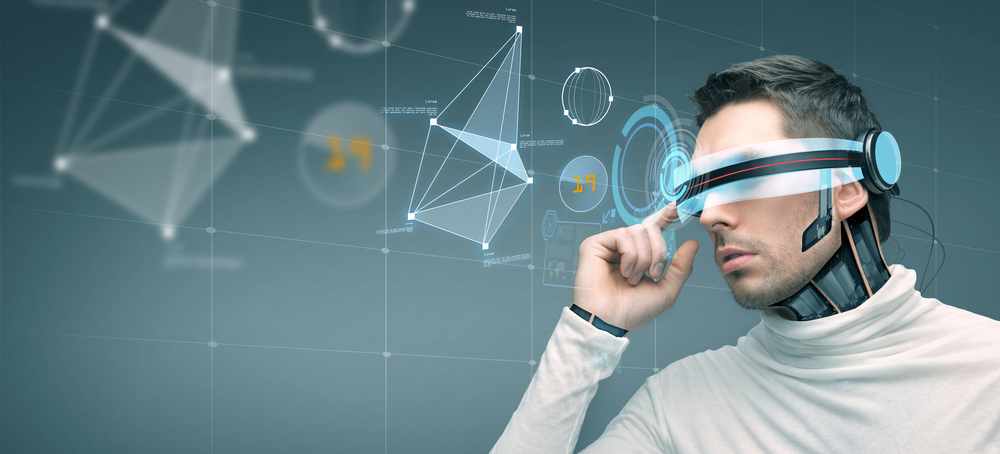
In recent years, the digital revolution has had an impact on almost every aspect of our lives. Today, as the speed of computer development continues to accelerate, there is hardly an industry or household in the world where computers and networks are not used.
This acceleration was first observed with the advent of modern microchips, but as Ray Kurzweil says in his book The Singularity Is Near, we can see very similar trends in other fields.
According to Kurzweil's Law of Accelerating Productivity, technological progress is accelerating exponentially, especially when it comes to information technology.
This means that the best tools of today will fuel this acceleration, enabling us to design better ones for tomorrow.
But our brains often envision the future linearly, not in this way. It is therefore possible that in the coming years we will see much more powerful technologies than today, and sooner than we expect.
As acceleration increases, what surprising and impactful changes will we face? In this article, we will examine the three areas of technology that, according to Kurzweil, will change our world the most in this century.
Genetic science, Nanotechnology and Robotics
Kurzweil predicts that genetic science, nanotechnology and robotics will be the defining technologies of our lives in the coming decades as they ride the wave of exponentially accelerating progress. In what ways are these technologies revolutionary?
- The genetic science revolution will allow us to reprogram our own biology.
- The nanotechnology revolution will enable us to manipulate matter at the molecular and atomic scale.
- The robotics revolution will allow us to create a better-than-human, non-biological intelligence.
Genetics, nanotechnology and robotics will all take off at different times in the coming years, but we are already experiencing all three to varying degrees. Each is influential in its own right, but together they will be far more influential. Kurzweil put these ideas into his book The Singularity Is Near more than a decade ago.
Let's take a look at what is happening in each of these areas today and what we can expect to happen in the future.

The Genetic Science Revolution: 'The Intersection of Knowledge and Biology'
"As we understand the underlying information processes of life, we learn to reprogram our biology to eliminate disease, dramatically increase human potential and dramatically extend life span."
- Ray Kurzweil, The Singularity Is Near
Humans have been "reprogramming" their environment almost since they set foot on the planet. Now that we know enough about how our bodies work, we can begin to address disease, aging and their genetic and cellular basis.
Biotechnology Today
We have long wondered what genetic engineering is capable of. Since 1975, when the ethical principles of genetic engineering were discussed at the Asilomar Conference, there have been remarkable advances both in the laboratory and in practice. For example, genetically modified crops have become widespread (albeit controversial).
Since the completion of the Human Genome Projectin 2003 , great strides have been made in reading, writing and manipulating our own DNA.
We are now reprogramming the code of life in creatures from bacteria to dogs - and perhaps soon to humans. The "how", "when" and "why" of genetic engineering are still debatable, but the pace is incredible.
Among the most important developments in biotechnology in the last decade are the following:
- Induced Pluripotent Stem Cell (iPSC)
- Human Genome Editing (CRISPR)
- 3D Bioprinting
- The $1,000 Genome
- Tissues grown in the laboratory
- DNA Storage
- The Rise of the Citizen Biohacker
Many issues need to be overcome before these new technologies can be widely used on humans, but the possibilities are incredible. And it's safe to assume that the pace of progress will only accelerate from here. So what is the surprising conclusion? Kurzweil argues that most diseases will become curable in the future, and that the aging process can be slowed, perhaps even reversed.

Nanotechnology Revolution: 'The Intersection of Knowledge and the Physical World'
"Nanotechnology has given us the tools... to play with nature, atoms and molecules, which is our ultimate toy box. Everything is made of them... The possibilities for creating new things seem endless."
- Nobel laureate Horst Störmer, The Singularity Is Near
Many trace the birth of conceptual nanotechnology to Richard Feynman's 1959 speech. In a lecture entitled "There's Plenty of Room at the Bottom" , Feynman spoke of the "serious consequences of designing machines at the atomic level". But the nanotechnology industry actually began in 1981, with the invention of the scanning tunneling microscope.
According to Kurzweil, no matter how much we fine-tune our DNA-based biology, it will never come close to what we can engineer by altering matter at the molecular and atomic level.
Nanotechnology, Kurzweil says, will enable us to redesign and rebuild "molecule by molecule our bodies, our brains and the world we live in."
Nanotechnology Today
Even though we see traces of the "genetic revolution" in the news and in our daily lives, for most people nanotechnology is still the stuff of science fiction. However, it is possible that you are already using products that have benefited from nanotechnology research in your daily life. These includesunscreens, clothes, paints, cars , etc. And of course, the digital revolution is also underway thanks to new methods that allow us to make chips with nanoscale features.
Aside from today's useful applications, there is much more research and experimentation to be done in the groundbreaking (but experimental) field of nanotechnology:
While we are getting better at manipulating matter at the nanoscale, we are still a long way from nanorobots or nanomachiners that can fabricate and repair atom by atom.
However, as Feynman pointed out, the principles of physics do not contradict such a future. And we only need to look at our own biology to see a working model of the complex nano-functioning of life already.

The Robotics Revolution: 'Making Strong Artificial Intelligence '
"It is hard to think of a problem that a superintelligence cannot solve or help us solve. Disease, poverty, environmental destruction, unnecessary suffering of all kinds: these are problems that a superintelligence equipped with advanced nanotechnology could eliminate."
- Ray Kurzweil, The Singularity Is Near
The name of this revolution can be a bit confusing. Kurzweil says that robotics is artificial intelligence embodied, but the intelligence part is the most important. Without losing sight of the risks, he argues that the artificial intelligence revolution is the most serious transformation human civilization will witness in history.
Because this revolution is about being able to replicate human intelligence, "the most important and powerful feature of human civilization".
Weare already in the era of"narrow AI" - machines programmed to do one or a few specific jobs - but this is only a small foreshadowing of what we will see in the future.
Strong (or general) AI will be as capable as a human when it comes to solving problems. According to Kurzweil, even artificial intelligence that operates at the level of human intelligence will be superior to humans thanks to some features unique to machines:
- "Machines can gather resources in ways that humans cannot."
- "Machines have infallible memories."
- Machines can "consistently perform at peak levels and combine the highest skills."
Artificial Intelligence Today
Most of us regularly use some form of narrow artificial intelligence: Siri, Google Now, even increasingly Watson. Other narrow forms of artificial intelligence include the following programs:
- Speech and image recognition software
- Pattern recognition software for autonomous weapons
- Programs used to detect fraud in financial transactions
- AI-based statistical learning methods that Google uses to rank links
The next step towards powerful artificial intelligence will be machines that learn on their own, without being programmed or fed information by humans. Research and applications of this new and effective form of machine learning, called "deep learning", are currently growing rapidly.
Why is this important?
Kurzweil calls genetic science, nanotechnology and robotics overlapping revolutions because as these technologies mature, we will continue to experience each of them simultaneously.
These and other technologies are likely to combine to affect our lives in ways that are hard to predict. Kurzweil warns that each of these technologies, like all great technologies, has the power to do great good and great evil. Our ability to harness their power to improve lives depends on our words and actions today.
"[These three technologies] will offer us ways to tackle age-old problems like disease and poverty, but they will also empower destructive ideologies, " Kurzweil writes . "While there is no consensus on what human values are, we have no choice but to strengthen our defenses while using these accelerating technologies to enhance them."
The more we visualize and discuss these three powerful technological revolutions, the easier it will be for us to guide their development in ways that will do more good than harm .
To learn more about the exponential pace of technology andRay Kurzweil's predictions, read his 2001 essay "The Law of Accelerating Returns" and his book, The Singularity Is Near.
Image Credit:Shutterstock.com
Related Articles


-2.jpeg)