






 Chat
Chat

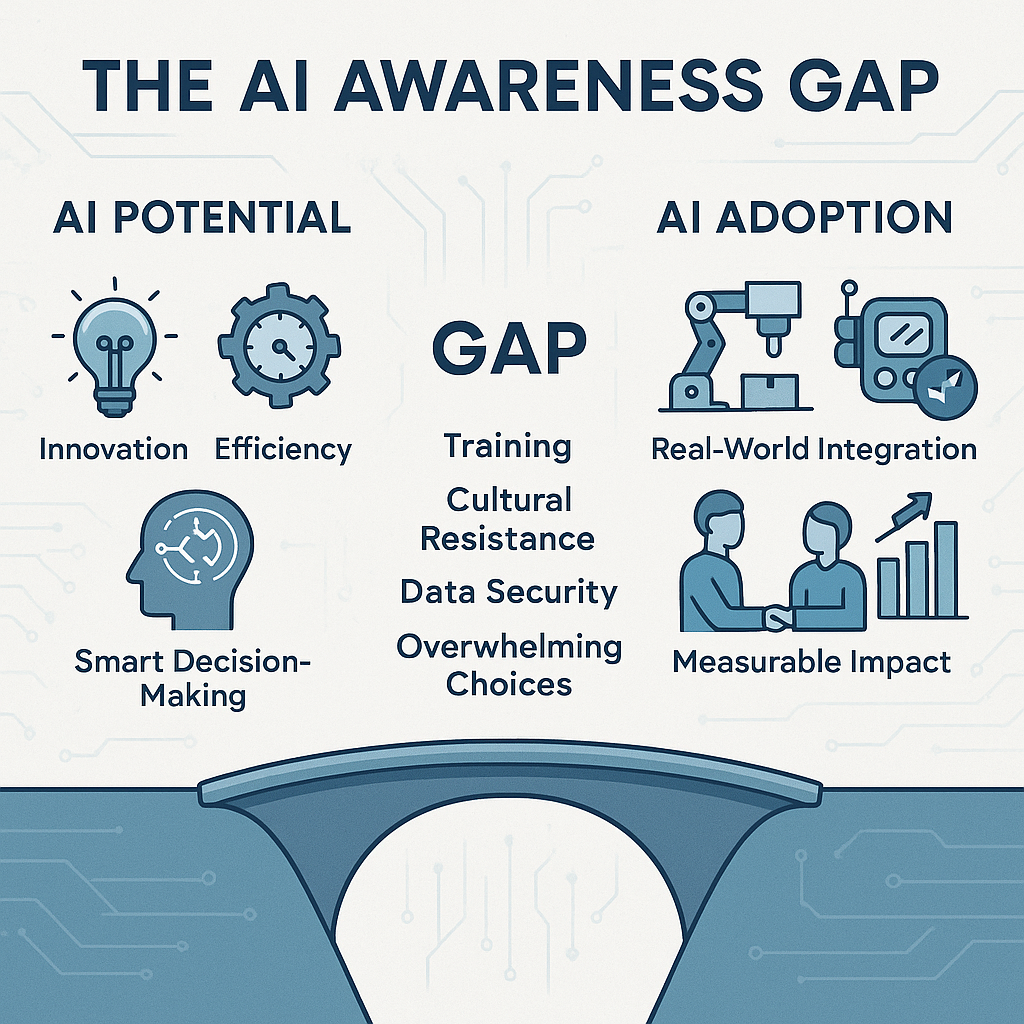
AI offers the promise of transforming operations, accelerating decision-making and delivering unprecedented efficiency. But for many organizations, adoption is stalled. The technology is ready, but the people are not. Resistance is not a minor glitch; it is one of the most critical factors determining whether AI can deliver on its promises.
Understanding why resistance occurs and knowing how to manage it is essential for leaders who want to make AI more than just a buzzword.
Resistance is Not Just "Fear of Change"
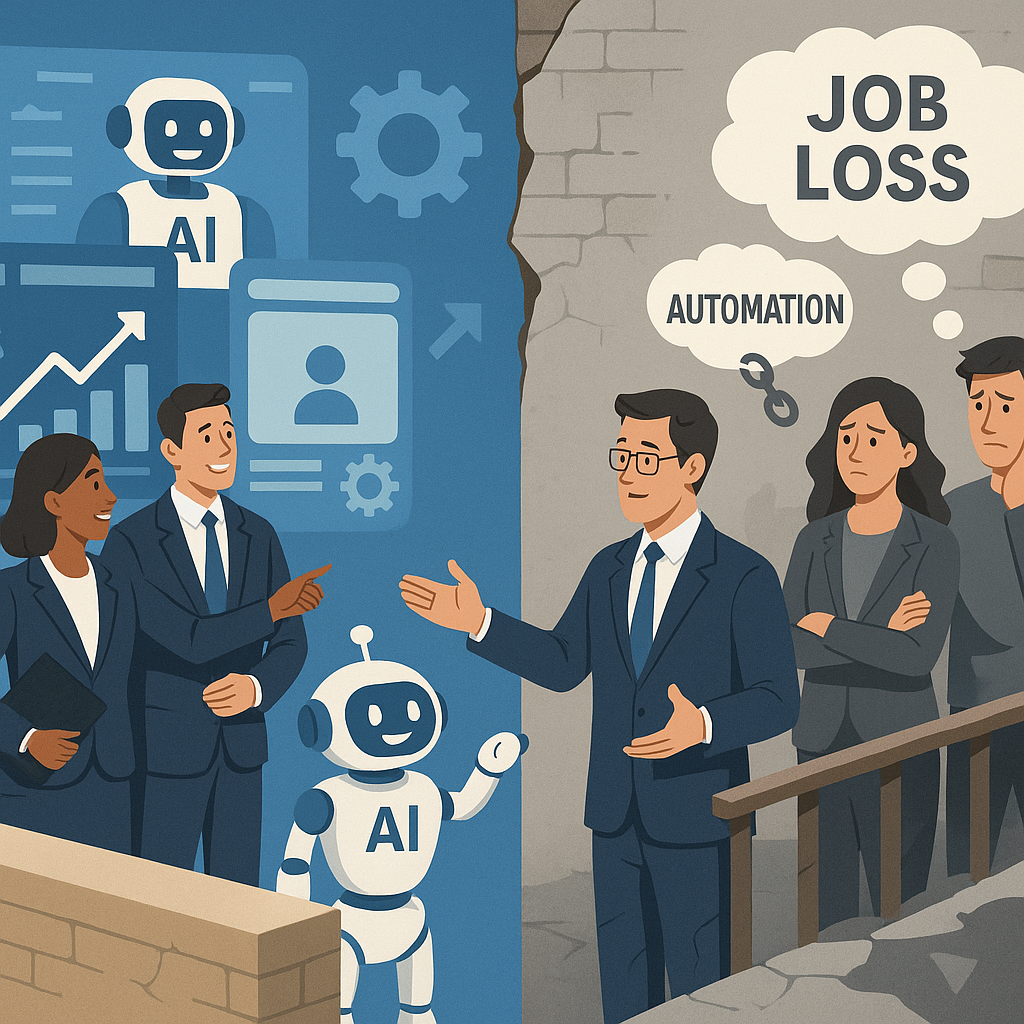
Resistance to AI adoption is often described as fear or reluctance. But this is rarely irrational. Employees, managers and even senior managers may object for valid reasons:
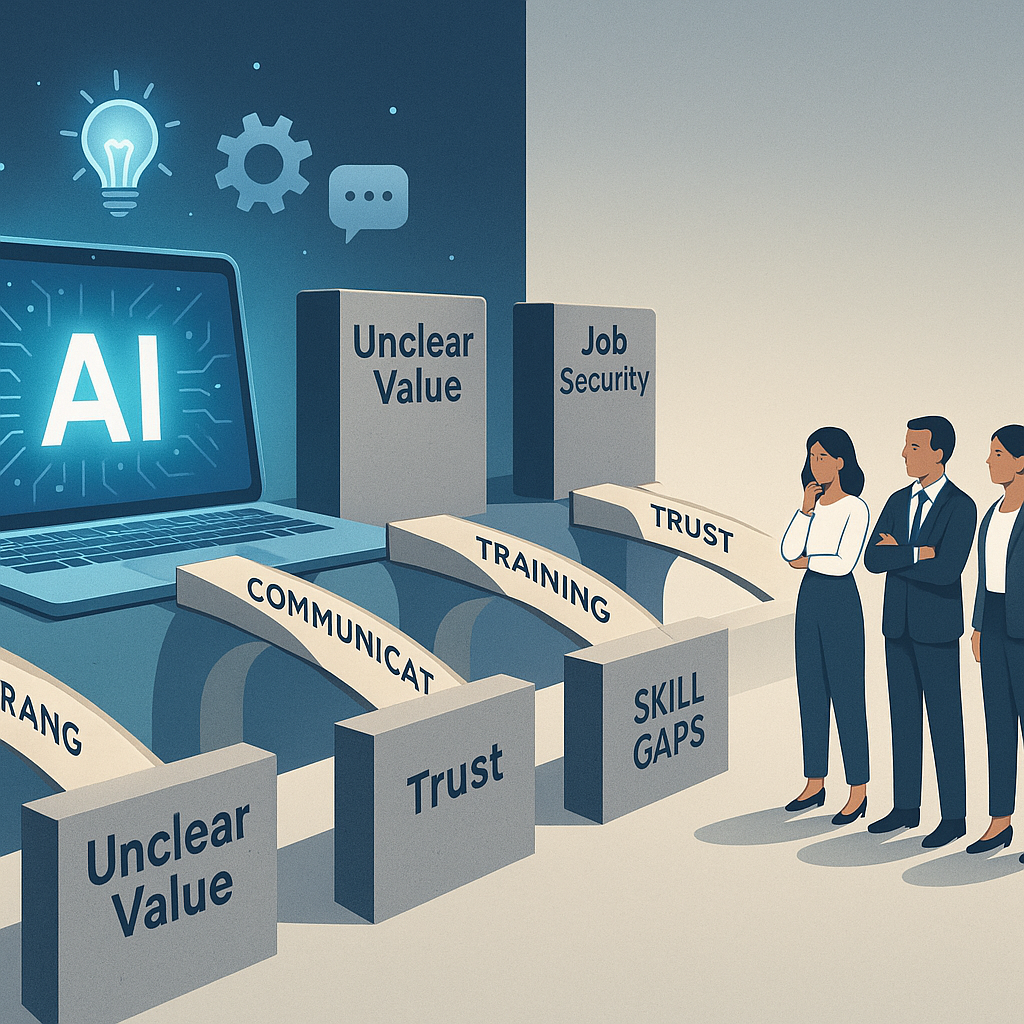
- Uncertainty: Teams struggle to see how AI will improve their workflow.
- Job security concerns: Automation triggers fear of role loss.
- Trust deficits: Unsuccessful early pilots undermine trust.
- Skills gaps: Users may not feel ready to use new technology effectively.
For example, a marketing team may be hesitant to adopt an AI-powered campaign optimization tool. They have perfected manual segmentation for years. When the algorithm makes suggestions that challenge their expertise, hesitation is a rational response, not disobedience.
The True Cost of Resistance
Ignoring resistance has serious consequences. According to a Deloitte study on enterprise AI adoption, more than 60% of AI initiatives fail to meet expectations, often due to low user adoption.
Costs include:
- Wasted investment: License fees, infrastructure and implementation costs are lost if tools are underutilized.
- Process fragmentation: Partial adoption results in inconsistent workflows, duplicated efforts and siloed data.
- Morale decline: Employees who feel unsupported walk away from work and overall productivity drops.
The human factor is not peripheral; it is central to AI success.
Types of Resistance
Resistance manifests in various ways:
- Passive resistance: Employees use AI tools reluctantly or partially.
- Active resistance: Teams avoid AI systems or revert to legacy workflows.
- Leadership resistance: Executives hesitate to support initiatives due to uncertain ROI or perception of risk.
All these are caused by unmet expectations, uncertainty or fear of loss.
Understanding Psychology
Resistance often operates at a subconscious level. Humans tend to maintain routines that yield predictable results. AI disrupts these routines, creating cognitive friction.
For example, a customer support team may resist chatbots that route requests. While the tool reduces repetitive queries, agents may worry that performance metrics are being monitored more frequently. Resistance increases in the absence of framing and transparency.
Strategies to Manage Resistance
Successful AI adoption requires a structured approach that balances technology with human factors.
1. Early and Open Communication
Transparency is critical. Leaders should explain the following:
- Purpose of the AI tool
- Supporting existing roles, not replacing them
- Expected results and benefits
Sharing real examples of successful AI implementations builds trust and reduces doubts.
2. Involving Teams from the Start
Involving employees in pilots and workflow design increases ownership and reduces fear. Their feedback ensures smooth integration of AI into daily operations.
Example: A global retailer piloted an AI-powered scheduling tool. Managers were concerned that staff hours would be reduced. By involving employees in the design process, it was explained that AI would reduce administrative workload and redirect employees to customer-focused tasks. Adoption increased by 40% in three months.
3. Provide Targeted Training
Resistance often stems from a lack of trust. Customized training ensures that users understand the tool, know best practices and feel supported.
- Short, practical modules are more effective than long lectures.
- Hands-on exercises linked to real workflows reinforce learning.
Example: A financial company implemented an AI-based fraud detection tool. Initially, adoption was slow. Adoption increased from 35% to 78% within two months of participation in scenario-based workshops.
4. Show Quick Wins
Tangible results build trust. Identify low-risk, high-impact processes where AI can bring immediate benefits:
- Automation of repetitive reporting
- Improving lead scoring accuracy
- Prioritization of customer demands
Maintain momentum by celebrating these early wins.
5. Build Cross-Functional Support
AI adoption cannot live only in IT. Successful projects involve operations, data, compliance and business leaders. Cross-functional collaboration ensures that vehicles are technically sound and operationally appropriate.
- Appoint department champions
- Encourage collaborative problem solving
- Watch adoption together
6. Addressing Cultural and Emotional Barriers
AI adoption is as much about culture as technology. Employees are concerned about autonomy and the importance of the role; managers are concerned about return on investment and disruption.
- Openly acknowledge concerns
- Position AI as a supporter rather than a replacement
- Highlight opportunities for growth and skills development
Teams that see AI as an enabler participate more actively and innovate faster.
Measuring Success
Resistance is not always visible. Leaders should monitor the following:
- Adoption rates by department
- Time saved with automation
- Accuracy improvements
- Employee feedback on user experience
Metrics drive iterative improvements in training, communication and workflow design.
Long Term View
AI adoption is a continuous journey, not a one-off project. Resistance can arise as new tools scale or during integration with legacy systems. Successful organizations:
- Treats adoption as continuous change management
- Collects employee feedback on a regular basis
- Celebrates incremental gains and reinforces transparency
Organizations that succeed with AI are those that integrate human factors as well as technology.
Summary
- Resistance is natural, caused by uncertainty, lack of skills and fear of role loss.
- Early communication, employee engagement and practical training reduce hesitation.
- Quick wins, transparent measurement and cross-functional support strengthen adoption.
- Addressing cultural and emotional barriers is as important as technical implementation.
AI doesn't just transform processes; it changes people's experience of work. Ignoring resistance leads to stalled adoption, wasted investment and frustration. Leaders can turn hesitation into buy-in when they acknowledge fears, provide clear guidance and demonstrate tangible benefits.
Organizations that succeed with AI are not the ones with the most tools, but where employees feel competent, confident and able to use AI effectively on a daily basis.