






 Chat
Chat


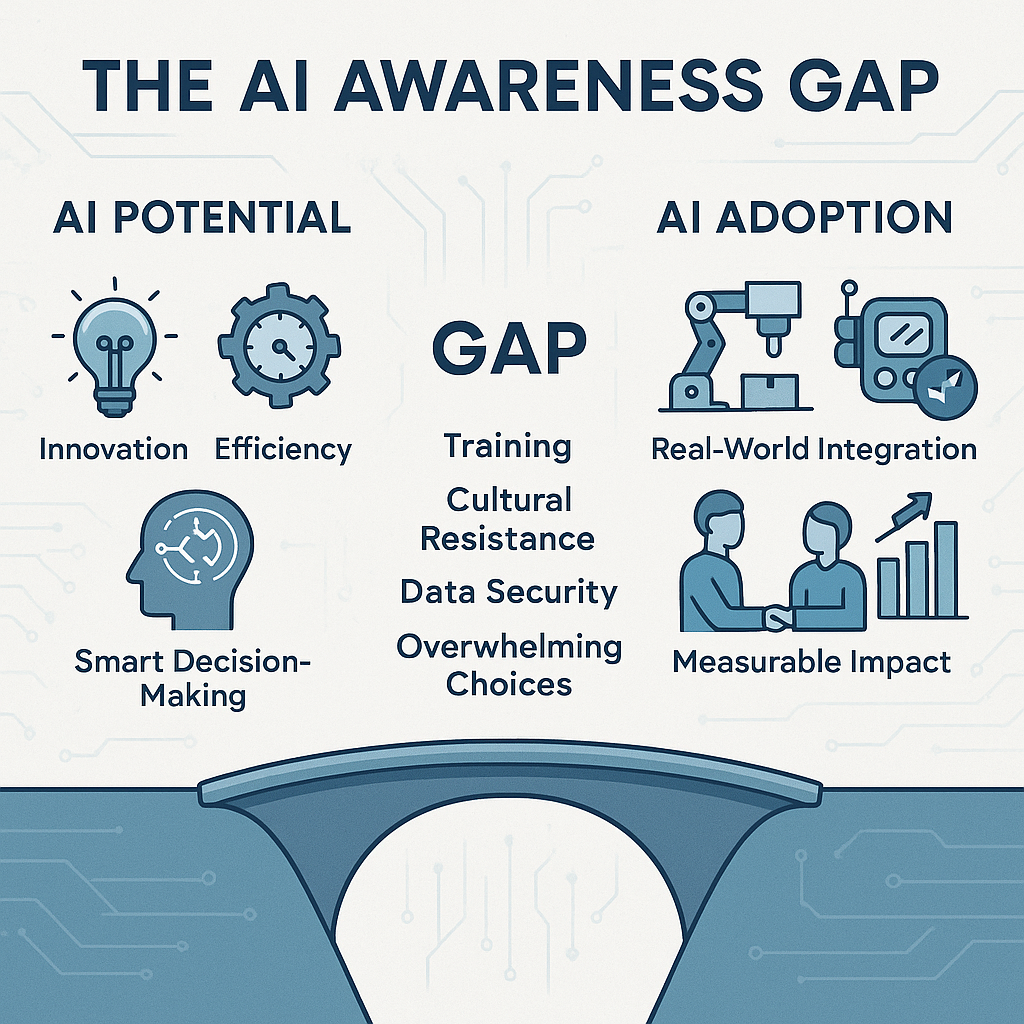
Artificial intelligence has become a cornerstone of modern business strategy. From predictive analytics to intelligent automation, organizations are investing heavily in AI initiatives to increase efficiency, deepen insights and unlock growth opportunities. But while the technology is ready, many AI projects are failing - the problem lies not with the algorithms, but with the people. The change management gap stands out as the silent barrier to AI success.
Understanding and proactively addressing this gap is vital for leaders who want AI to have real business impact.
The Importance of Change Management in AI
AI initiatives are not just about deploying tools. They fundamentally change work processes, decision-making and employee roles. Many digital transformation efforts fail because organizational resistance is underestimated. Without structured change management, even the most advanced AI systems can be underutilized or abandoned altogether.
The consequences of poor change management include:
- Low adoption rates: Teams may prefer familiar processes to fully utilizing new AI tools.
- Reduced ROI: If adoption is slow or partial, investments may not deliver their potential value.
- Employee Dissatisfaction: Lack of communication or support reduces morale and trust in leadership.
Change management is not an option. The bridge between technology potential and business outcomes.
Common Gaps in AI Change Management
Organizations face some challenges when implementing AI:
1. Lack of Clear Communication
Employees need to understand not only what is changing, but why. Without clarity, anxiety, confusion and passive resistance can result.
For example, a marketing team adopting an AI-powered campaign optimization tool may show hesitation if leadership does not explain that the tool improves their business.
2. Inadequate Training and Support
New AI tools are often launched without sufficient skills development. Employees may be unprepared, overwhelmed or unsure about integrating the tool into their daily routine, leading to underutilization of the tools.
3. Lack of Leadership Alignment
If leaders are not actively involved in the adoption process, employees may question the legitimacy of the initiative. Leadership should demonstrate use, emphasize benefits and address concerns openly.
4. Resistance to Role Changes
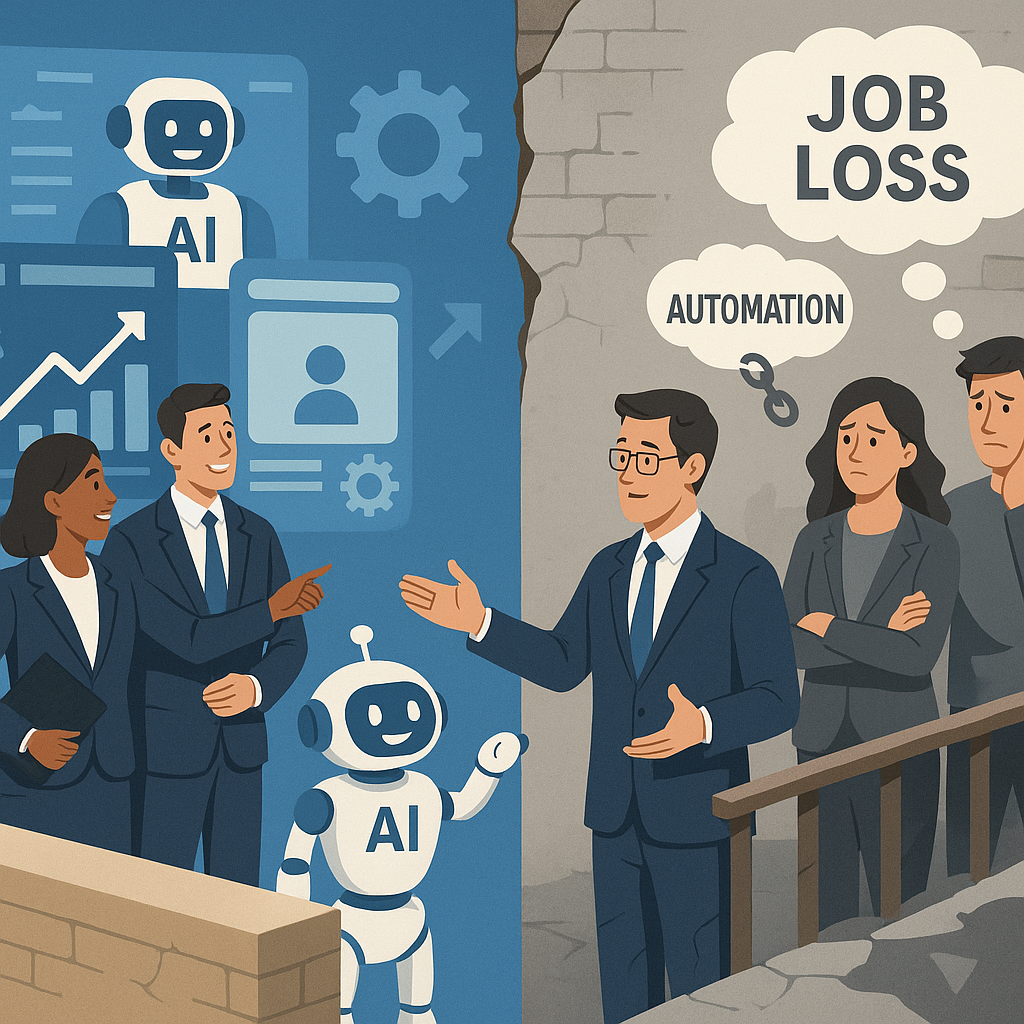
AI shifts responsibilities, automates repetitive tasks and introduces new decision-making frameworks. Fear of role loss or uncertainty about performance expectations can create explicit or implicit resistance.
Strategies to Close the Change Management Gap
The human side of AI adoption is critical. Leaders can use the following framework:
1. Early and Clear Communication
- Organize pre-implementation briefings to set expectations.
- Demonstrate with examples that AI complements roles, not replaces them.
- Create open feedback channels where employees can ask questions and share concerns.
2. Targeted Training Investment
- Offer scenario-based hands-on sessions connected to real workflows.
- Provide short reference guides and practical exercises instead of long lectures.
- Monitor adoption and adjust training to address gaps or confusion.
3. Build Cross-Functional Change Teams
- Include representatives from operations, IT, HR and business units.
- Ensure that different perspectives contribute to implementation planning.
- Support adoption by appointing change champions in teams and answer questions.
4. Align Incentives and Performance Measures
- Incorporate AI adoption into performance reviews.
- Recognize employees who are actively using AI to improve workflows.
- Celebrate early wins to show tangible benefits.
5. Promote Psychological Safety
- Encourage experimentation without fear of making mistakes.
- Position AI as a supportive tool, not a replacement.
- Normalize adaptation by sharing success stories and lessons learned.
Case Example: Financial Services Firm
A global financial services firm has implemented an AI-powered fraud detection system. Initial adoption was slow as analysts felt the tool would change their judgment. The firm took the following steps:
- Provided transparent briefings explaining that AI supports their business.
- Organized scenario-based workshops showing how AI flags high-risk situations; analysts focused on complex reviews.
- Involved cross-functional teams to improve workflows and address concerns.
Within a few months, adoption increased dramatically, productivity soared, and employees reported greater confidence in decision-making. Success came not only from the capabilities of AI, but from effective management of the human side of adoption.
Measuring Success in Change Management
Even the mildest resistance can affect results. Leaders should monitor the following:
- Adoption rates and usage patterns
- Process improvements such as reduction in repetitive tasks
- Employee feedback on usability and trust
Continuous monitoring allows organizations to maintain momentum by adjusting training, communication and workflows.
Long Term Perspective
AI adoption is a continuous journey. Resistance can re-emerge as new tools scale or during integration with systems. Successful organizations treat AI change management as a continuous process:
- Include adoption strategies in strategic planning
- Receive employee feedback on a regular basis
- Celebrate incremental gains and maintain transparency
Successful organizations integrate human factors thoughtfully rather than deploying technology quickly.
In a nutshell
- Change management is central to AI success. Technology alone is not enough.
- Lack of clear communication, inadequate training, leadership mismatch or fear of role change are common gaps.
- Strategies include early communication, targeted training, cross-functional teams, performance alignment and promoting psychological safety.
- Continuous measurement and iterative improvement ensure adoption and ROI.
- Seeing employees as partners in AI adoption turns hesitation into buy-in and strategic advantage.
Are you effectively closing the change management gap in AI transformation? Start by mapping workflows, clearly communicating value and investing in practical training. Involve employees early, celebrate early wins and keep communication open. Share your experiences in the comments and subscribe to our newsletter with practical strategies for successfully managing AI initiatives.