






 Chat
Chat

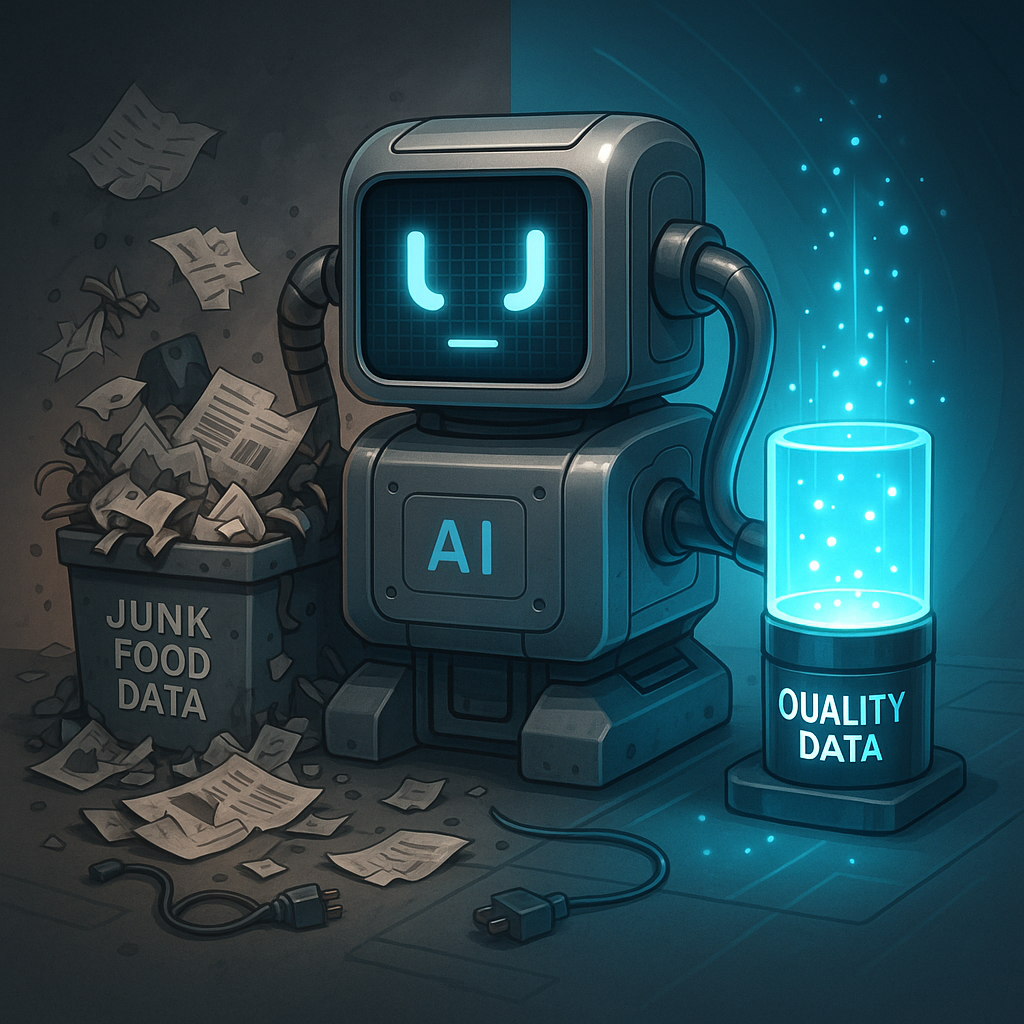
AI is often sold as the solution for the future: smarter automation, sharper insights, faster growth. But there's a paradox here-AI doesn't fail because of algorithms. It fails because of the data you give it.
In other words: garbage in, garbage out.
Companies eager to unlock the potential of AI quickly realize that poor data quality and fragmented accessibility are hidden obstacles blocking their path.
The Problem No One Wants to Admit
The numbers are sobering:
-
77% of data professionals say data quality issues impact their organization (TechTarget).
-
91% of companies acknowledge that data quality directly impacts operations, but most say they don't have processes in place to fix it (Data Ladder).
-
Gartner estimates that poor data quality costs organizations an average of $12.9 million annually - a financial burden that grows every year.
This is not a side issue. This is the foundation that cracks beneath your AI ambitions.
Leaders may want AI to predict revenue, identify customer churn, or optimize workflows. But if CRMs are full of duplicates, ERPs are outdated and marketing teams rely on inconsistent Excel spreadsheets, then these "AI initiatives" are built on sand.
Hidden Balances
When we talk about data quality, most people think about accuracy. But that's only part of the equation.
Accessibility is just as important.
-
Too much data → Teams drown in information pollution.
-
Too little data → Models starve.
-
Siloed data → AI can't even see it.
In the rush to quickly launch pilot projects, leaders often favor speed over certainty-hoping AI will "get it done." But AI is not magic. It magnifies weaknesses you already have.
Without solid data, your AI strategy becomes more guesswork than insight.
How Does It Feel in Real Life?
You don't need a research report to understand this pain - it is clearly visible in everyday operations:
-
Sales managers look at dashboards they cannot trust.
-
Marketing teams debate which numbers are "real".
-
Engineers spend more time cleaning data than creating solutions.
This is the silent tax of poor data quality. It destroys trust. It saps morale. It wastes hours that you cannot lose.
A Simple Analogy: AI is Like an Athlete
Think of AI as a world-class athlete. You can hire the best coaches, invest in the most advanced equipment, design the perfect training program. But if the athlete's diet is garbage? Performance collapses.
Data is diet. Bad data = bad results.
Defining the Challenge Clearly
Let's define two cornerstones to cut through the noise:
-
Data Quality → Accurate, consistent and reliable information.
-
Data Accessibility → Information that is accessible at the right time, in the right place, by the right people.
If you miss one of these, AI will only give you guesswork instead of guidance.
Practical Tactics to Fix Data Before AI
The good news? You don't need a million-dollar transformation project to move forward. Small, targeted steps bring big results.
-
Audit before automation. Don't pile AI tools on top of broken data. Do a data health check first.
-
Define ownership. Every data set should have a clear owner. If "everyone" is responsible, no one is actually responsible.
-
Start small. Pick a customer scoring process, for example, and clean that data set. Demonstrate the impact, then scale.
-
Eliminate silos. Integrate systems so AI can see the whole picture. Favor one clean source of truth over ten fragmented sources.
-
Measure trust, not just volume. Ask your teams: Do you believe the numbers you see? If the answer is "no", AI adoption stops.
The Human Side of Leadership
This challenge is not just technical-it is emotional.
Leaders feel pressure as if they have to show AI strategies "yesterday". Employees feel frustrated with strategies that work on broken data. The tension is clear:
-
Move too fast and you risk expensive AI failures.
-
Move too slowly and you fall behind competitors.
The answer is not to choose one or the other, but to do both. Move fast on pilots but build your data foundations in parallel.
Leaders who openly admit it - who can say, "Yes, there are gaps in our data and here's how we're fixing it" - build trust among teams.
Key Takeaways
-
AI fails not because of algorithms, but because of bad data.
-
Data quality and accessibility are the real foundations of transformation.
-
The cost of ignoring this? Wasted millions and lost trust.
-
The solution does not require perfection. It requires ownership, focus and continuous improvement.
AI won't fix your historical data. You need to do that yourself. Start small. Assign ownership. Create a single, clean source of truth.
The moment you see data as fuel, not a by-product, AI becomes an engine, not a burden.
👉 What is your biggest data challenge right now - quality, availability, or trust? Share in the comments.