






 Chat
Chat


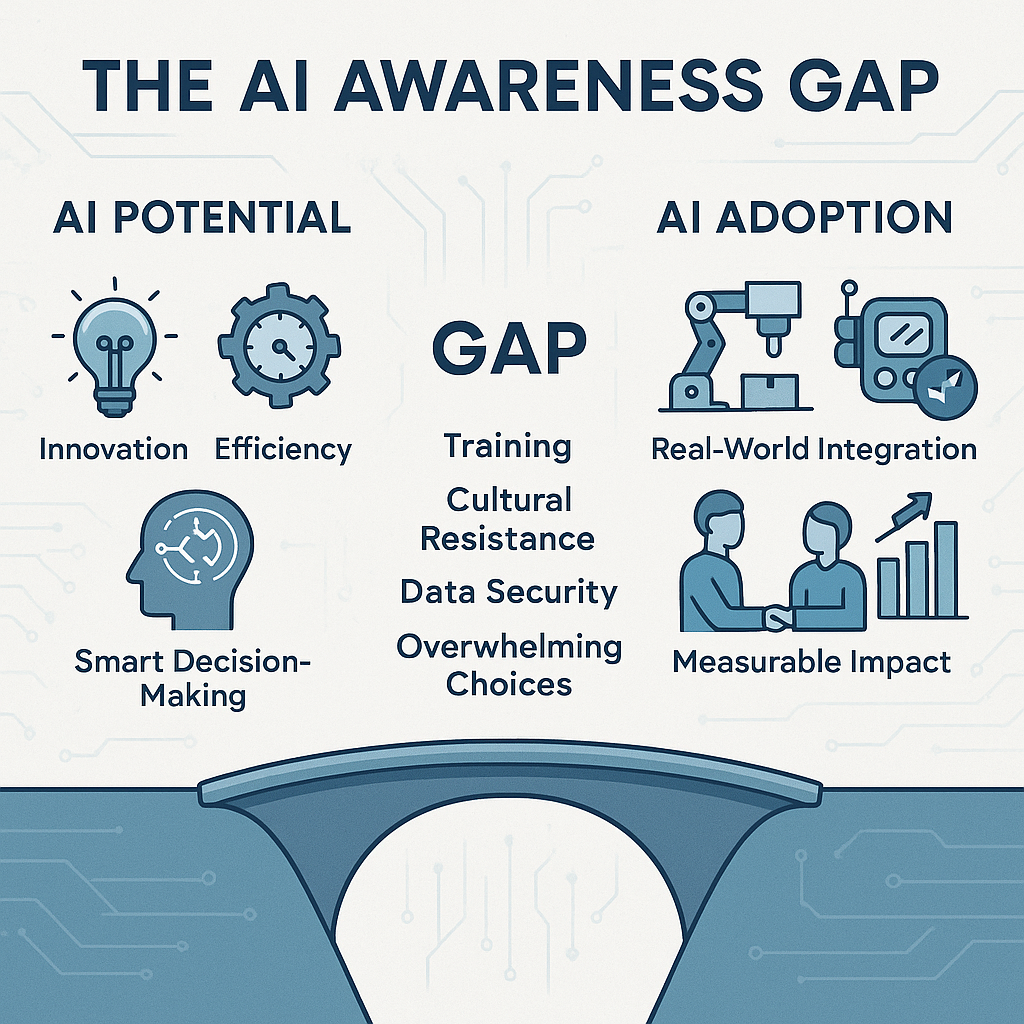
AI projects often make headlines as instant successes. Organizations feel pressure to adopt the latest tools quickly. Executives see the successes of competitors and employees support adoption. This creates a sense of urgency that can lead to rash decisions. Acting on hype without a plan often leads to wasted resources, underutilized tools and stalled initiatives. Understanding how to manage hype and fear of missing out (FOMO) is critical for leaders seeking measurable results from AI.
Why Hype Creates Risk
Media reports and industry trends can push organizations to adopt solutions before they are ready. Here are the common consequences of acting on hype:
- Launching pilot projects without a clear business objective.
- Investing in multiple tools that do not integrate with existing systems.
- Prioritizing speed over results, leading to low adoption.
Hasty adoption often reduces ROI and limits organizational learning. The problem is not technology, but how people and processes respond to external pressure.
Recognizing FOMO in your organization
FOMO manifests itself in several ways. Employees may request tools without understanding the workflow impact. Leaders may prioritize announcements over planning. Common signs are:
- Multiple departments adopting separate solutions.
- Decisions based on market trends rather than internal readiness.
- Metrics are activity-driven rather than business impact.
Recognizing these signs allows organizations to pause, reassess and implement a structured adoption strategy.
Lessons from Strategic Adoption
A global retailer faced pressure to implement an AI-powered recommendation engine regionally. The company first assessed data quality, team readiness and workflow integration. It launched a controlled pilot in a single region with measurable goals. Feedback loops identified issues and adjustments were made. Within a few months, adoption increased, inventory shortages decreased and teams reported more confidence in their work. Strategic planning prevented waste and created measurable value.
A financial services company took a similar approach when implementing a fraud detection tool. Instead of immediately expanding, it tested the system in a single department, monitored results and improved processes. Cross-functional teams were integrated, user concerns were addressed and monitoring was implemented before scaling. Measured results supported executive approval and minimized operational disruptions.
Strategies to Mitigate Hype-Related Risks
Organizations can focus on structured approaches to reduce the risks associated with FOMO:
Set Clear Goals
Define the business problem before choosing the solution. Clarify expected results and metrics. Decide what success will look like.
Assess Readiness
Assess data quality, team skills and infrastructure. Identify gaps and create a solution plan.
Start with Targeted Pilots
Launch small-scale projects that provide clear metrics. Test integration, workflow impact and user adoption.
Measure Results
Track adoption, business impact and user feedback. Use the findings to improve tools and processes.
Engage Teams Early
Involve IT, operations and business units in planning. Clearly communicate objectives, expected results and responsibilities.
Foster a Learning Culture
Encourage feedback, learn from pilots and continuously improve strategy. Build trust across the organization using insights.
Human Factors Impact Adoption
Technology alone does not deliver results. Human behavior determines the success of the tools. The key points are:
- Change Management: Clearly communicate the purpose of the initiative and its impact on the role.
- Psychological Safety: Allow experimentation without fear of mistakes.
- Collaboration: Break down silos between departments. Share knowledge and responsibility.
Ignoring these factors risks underutilization, low ROI and loss of trust.
Measuring Success Beyond Technology
Assessing success requires both quantitative and qualitative metrics. Examples
- Adoption rates across teams.
- Process efficiency gains or reduction in error rates.
- Employee trust and engagement with the system.
- Business impact, including cost savings or revenue growth.
Tracking these metrics enables leaders to understand the true value of initiatives and provides direction for continuous improvement.
Key Points
Hype and FOMO create pressure but do not guarantee results.
Structured planning, small pilots and clear goals reduce risk.
Measuring adoption, results and feedback enable informed decisions.
Human factors such as change management and collaboration are central to adoption.
Strategic implementation turns pressure into measurable value.
Call to Action
Assess your organization's readiness before embarking on AI projects. Start with a pilot, set clear goals and measure results. Involve teams and keep communication open. Share your experiences in the comments and subscribe to our newsletter with strategies for managing AI adoption and making data-driven decisions.