







 Chat
Chat


"What was going on? When the President's speech began, laughter erupted from the wards of patients with speech difficulties, and they were all eager to hear the President... That ancient Magician, that Performer, with his oratorical mastery, his theatrical approach, his emotional charm, was standing before them, and all the patients were dying of laughter."
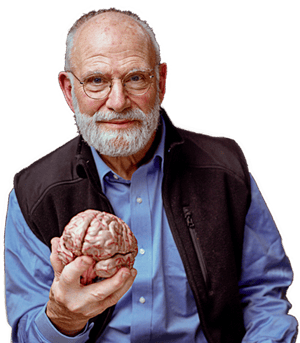 This is how chapter nine ofOliver Sacks' The Man Who Mistook His Wife for a Hat begins. In the above paragraph, Sacks, a respected professor of clinical neurology, describes his work with patients with speech difficulties. Receptive aphasia, or "speech deafness," describes a condition in which the brain is damaged, usually by stroke, head injury, infection, or concussion, and victims are unable to understand the words they hear. Interestingly, these patients can often actually understand much of what is said to them.
This phenomenon is also observed in our other friends on earth, animals. Many animals fully understand emphasis, expression, rhythm, volume, body language and tone of voice. Even if they don't understand the words directly, dogs can grasp the meaning. For this reason, dogs are often used to detect malicious and suspicious behavior, dishonesty and deception, and trustworthy people.
While aphasia is an extreme example of the impact of non-verbal communication, for most of us, communication involves more than just listening to a string of words. Natural speech is not just words. Words are accompanied by subtleties, facial expressions, expressions, gestures that give them meaning, move us or create an emotion. According to Sacks' definition of speech, it is "an articulation of one's whole self, a comprehension that involves much more than noticing words." Hence the laughter from the aphasia service during the President's speech.
In recent years we have seen the emergence of numerous modelsin the coaching world. These prescriptive coaching models usually consist of a series of steps that the coaching person must follow, each of which, if followed seriously, is supposed to help the coach get the coachee from point A to point B.These steps are often designed in such a way that they can be summarized on small cards, giving the coach references to follow at a glance throughout the session. Potential coaches and/or managers are often trained on the "four steps to coaching with the (insert your favorite acronym here) model". Then they complete the training, eager to try this newfound model on someone else.
Unfortunately, what these coaches learn is just a series of words and often lacks depth of meaning. Although the coach tries to carefully follow each step of the model, a person receiving coaching guided by the "Say this now" sequence on the card hears only the coach's words and nothing more. The coach finishes the session, having completed all the steps without skipping a beat, thinking that the individual is equipped to succeed. Meanwhile, the coachee has caught a series of words and steps, but has not grasped the meaning.
 Real coaching is a meaningful process, not a conversation following the steps of a simplified model. It is a process that cannot be accomplished by just talking. It is an exchange of more than words (note the word "exchange" here, which implies that two people are communicating). Coaching evolves over time and is much deeper than simply checking the boxes next to the "talking points" on the coaching card. This exchange involves a willingness to move away from the standard model to find other ways of feeling, expressing, listening, understanding and other ways that are truly applicable to the individual being coached.
While most coaching models are useful in starting a conversation, they are no substitute for real coaching. However, many managers and coaches simply follow the steps, paying attention to whether what comes out of their mouths matches what is on the cards in their hands. And that usually doesn't work. That is why it is important to get the right leadership and coaching programs from the right people.

Related Articles