











 Chat
Chat


Dear Bahar
In a study we conducted in our company, I took the "Your Communication Style Under Stress" test from the book "Critical Conversations". I must say that I was really upset and offended that my communication style was "violence".
The result of the majority of the people who participated in the study was "silence". In the discussion in the study we came to the conclusion that "silence" is actually better than "violence". I was the outlier in the group and I was ashamed of it. At that moment I even considered leaving the study with an excuse. I realize that I am sometimes aggressive in my conversations, but I am not violent. I don't think it would help me to be labeled as a violent person. Why was it thought to use such an extreme word to describe any aggressive tendencies in this book?
Signature,
Confused and offended
Dear Offended,
 To answer your question on this subject, I quote below what Joseph Grenny, one of the authors of the book "Critical Conversations", himself said:
"There were many people who reacted, as you did, to the fact that we used the word "violence" to describe the category of aggression in the "How You Communicate Under Stress" test. Thank you for the opportunity to explain our word choice.
To Encourage Deep Reflection
The main reason for choosing this meaningful term was to encourage people to think more deeply. Often the magnitude of aggression in communication and its effects on people are not synchronized. For example, a manager who only speaks to a subordinate in a condescending manner can cause enormous psychological damage to that employee, making them feel inadequate and even traumatizing them. On the other hand, a couple who have both grown up in families where there is a lot of shouting, may often shout angrily at each other, but may not hurt each other very much. But children are seriously affected. It is not the level of the verbal weapon used that matters, but the situation it causes. From our point of view, "violence" is our attempt to use coercion to achieve our goals. It is our decision to use our superiority, position, vocabulary, confidence or other assets to get what we want. We believe that the decision to act on such a principle has serious moral implications, and our purpose in using this word is to invite us all to think more deeply about this decision. By deliberately using this term, we hope to help people who behave this way because this is the model they saw in their homes as children, or simply because it is their habit, to re-evaluate whether this action is consistent with their values.
About Critical Conversations Training


To Honor the Hurting
Another reason is that we don't want to excuse aggressive behavior by using a term that is less loaded with meaning, because we feel that if we do so, it would both mask the moral reality of the aggressive actions and not honor those who have been hurt by those actions. Interestingly, I have never been pressured to soften the word by people who have had an aggressive manager, spouse, parent or neighbor. If you think about how others influence us, the word is more intended to describe lived experience than as an academic reference.
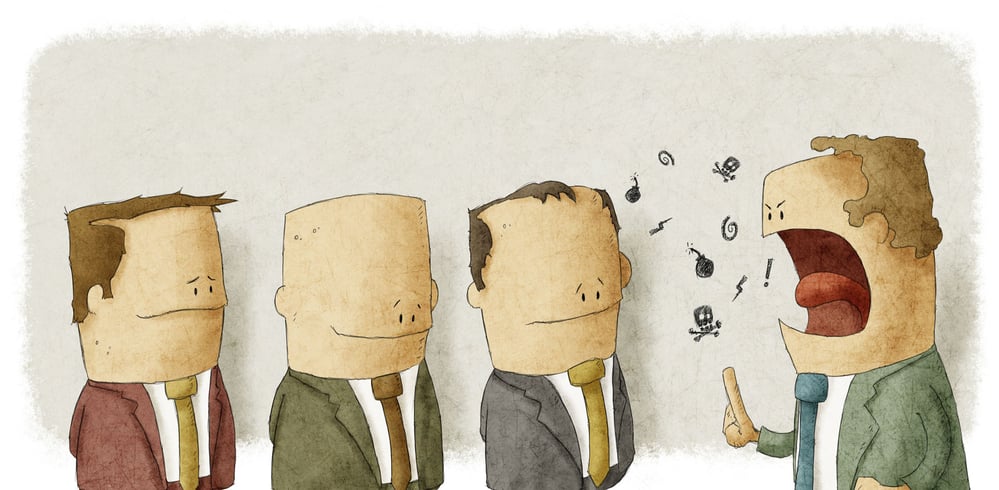
Unfortunate Conclusion
I am sorry to hear that in your company's study your group concluded that between the labels "Silence" and "Violence", "Silence" is somehow functionally or morally superior. I strongly disagree. Many of the most horrible things in the world - genocides, workplace injuries and deaths, toxic work environments, immoral policies, unsafe products - are the result of too many people remaining silent. Interestingly, many people make a false comparison between being respectful and being honest, between remaining passive and standing up for what is right.
Ultimately, both Silence and Violence cause great damage. Both destroy relationships. Both are often staged with selfishness and insincerity. I hope these thoughts have helped you. Or at least help you understand where we are starting from.
Love
Related Articles