







 Chat
Chat

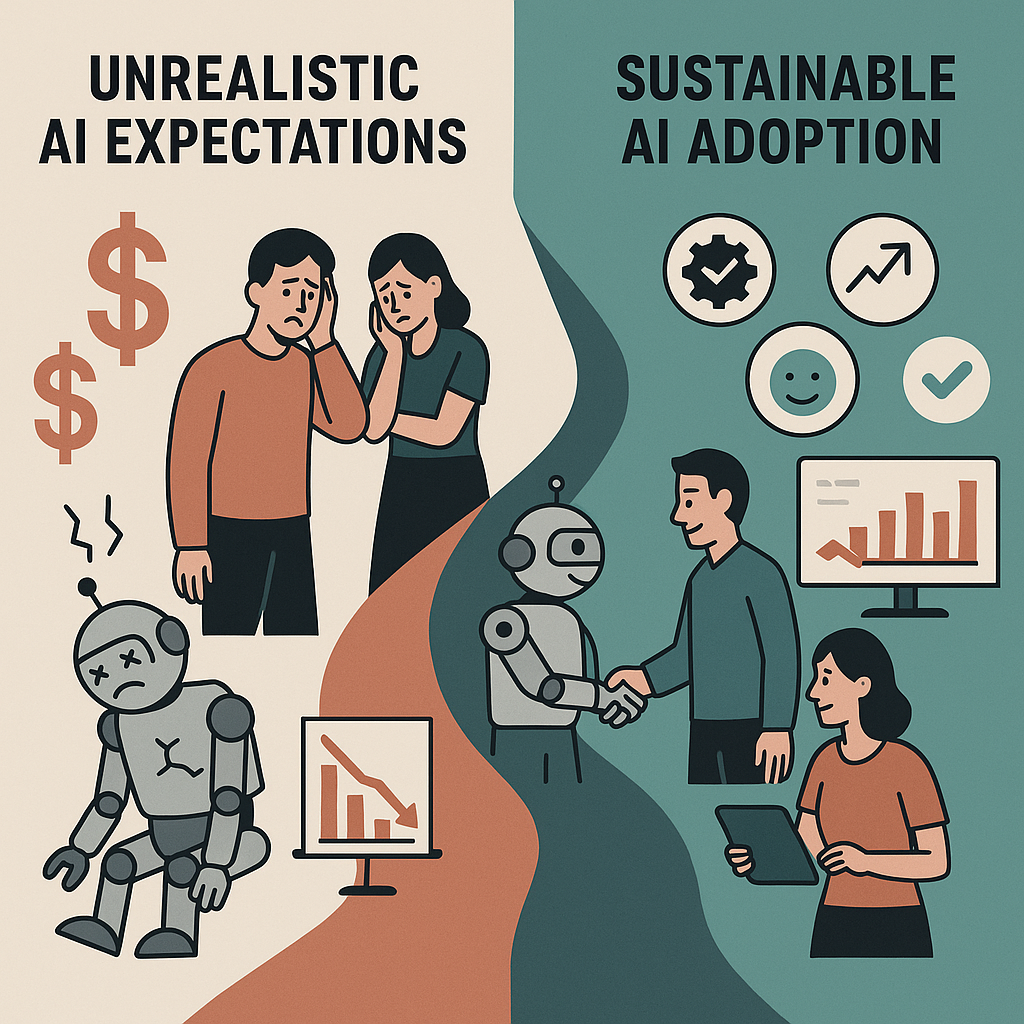
Artificial intelligence has captured the imagination of business leaders around the world. Promises of instant efficiency, predictive analytics and revolutionary automation are grabbing headlines. Yet, many organizations are disappointed. The problem is often not the technology - it's unrealistic expectations and an excessive focus on cutting costs at every step.
Investing in AI without a clear understanding of its practical limitations can lead to wasted resources, frustration in teams and missed opportunities. In this article, we discuss the challenges organizations face when expectations exceed reality, the risks of cost-cutting obsession, and actionable strategies for building sustainable AI initiatives.
The Gap Between Expectation and Reality
It is easy to assume that AI can do everything - and do it perfectly. From automating complex processes to generating real-time insights, the hype often exaggerates what is possible today. Research reveals that more than 60% of AI projects fail to deliver measurable value within the first year, largely due to mismatched expectations.
Take, for example, a retail company implementing AI for demand forecasting. Leaders expected near perfect accuracy from day one. When early results failed to meet expectations, frustration mounted, teams questioned the investment, and adoption slowed. The reality is this: AI systems require high-quality data, iterative model training and cross-functional collaboration. They are tools for informed decision-making, not silver bullets.
Key takeaway: Set expectations in line with operational realities. AI is there to support, not replace, strategy, experience or human judgment.
Obsession with Cost Cutting: A Hidden Risk
While cost control is critical for any organization, focusing on over-cutting the expenses of AI projects can be counterproductive. Leaders often underestimate the hidden costs of poor data quality, integration challenges and change management. Short-term savings can result in long-term inefficiencies and lost ROI.
For example, a manufacturing company tried to implement an AI-powered predictive maintenance system but chose the cheapest vendor. The result? Frequent system failures, poor integration with existing machines and costly downtime that exceeded the initial savings.
Practical insight: Treat AI investments strategically, not just operationally. Budgeting for quality data, skilled staff and ongoing support is essential to achieve measurable results.
Aligning AI Investments with Business Goals
To avoid falling into the trap, organizations should link AI initiatives to clearly defined business objectives.
Identify High Impact Use Cases
Start with processes where AI can provide measurable benefits. For example, predictive analytics for inventory management or customer segmentation can deliver fast and tangible results.
Identify Success Metrics Early
Establish important KPIs. Instead of tracking system utilization, focus on results such as reduced cycle time, increased customer satisfaction or increased revenue.
Plan iterative improvement
AI adoption is rarely perfect on the first try. Continuous feedback loops, data improvements and iterative model updates help teams move from experimental success to operational success.
Practical Steps to Avoid Unrealistic Expectations
- Educate Stakeholders
Organize workshops and briefings that explain AI's capabilities and limitations in a clear and understandable way. When teams understand what AI can and cannot do, adoption increases and unrealistic expectations decrease. - Pilot Before Scale
Start with small-scale projects. Pilots provide valuable lessons, identify risks early and demonstrate achievable value without over-utilizing resources. - Balance Cost and Quality
Select suppliers and tools on the basis of proven performance and long-term reliability rather than price alone. Consider the total cost of ownership, including maintenance, updates and employee training. - Involve People in the Process
AI works best in combination with human expertise. Employees should be able to review, interpret and improve AI deliverables. This approach reduces errors and builds confidence in adoption.
Case Study: Turning Expectations into Results
A global logistics company faced repeated failures in its AI-powered route optimization system. Initially, leadership expected immediate productivity gains without investing in data cleansing or team training. The system fell short, adoption stalled, and frustration grew.
The company took the following steps:
- Cleaning and standardizing operational data
- Train logistics teams on AI outputs and decision processes
- Pilot small routes before full-scale deployment
Within six months, delivery efficiency increased by 18%, employee confidence soared and leadership reported a clear, measurable ROI. Unrealistic expectations and strategic investment shift from cost-cutting to cost-cutting was the turning point.
Avoiding the "quick win" trap
Companies often chase quick AI success to impress stakeholders or justify budgets. While short-term gains are valuable, they should not replace strategic planning. Sustainable AI transformation requires patience, iterative improvement and realistic goal setting.
Tips for long-term success:
- See AI as a journey, not a one-off project
- Encourage cross-departmental collaboration for alignment
- Track results-oriented metrics rather than system usage
- Invest in both technology and human expertise
Strategy Instead of Hype
AI transformation can deliver extraordinary business results-but only when expectations are realistic and investments are strategic. Leaders who ignore these lessons risk wasted resources, team frustration and failed initiatives.
On the contrary, organizations:
- By setting clear, achievable goals
- Investing in data quality and human expertise
- By implementing pilot initiatives
- Balancing cost efficiency with long-term reliability
...build internal and external trust while realizing measurable benefits from AI.
AI is not a shortcut or a magic solution - it is a powerful tool when used thoughtfully. Start small, plan strategically and focus on results. This way your organization can rise above the hype, avoid costly mistakes and create lasting competitive advantage.